ServicesWhole-Home Filtration
Whole-Home Filtration in Georgetown
We fit one filtration system on your main water line, so every faucet, showerhead and appliance in your home draws cleaner water with better taste. One small crew handles your test, the installation and the handoff, and they explain each part as they go.
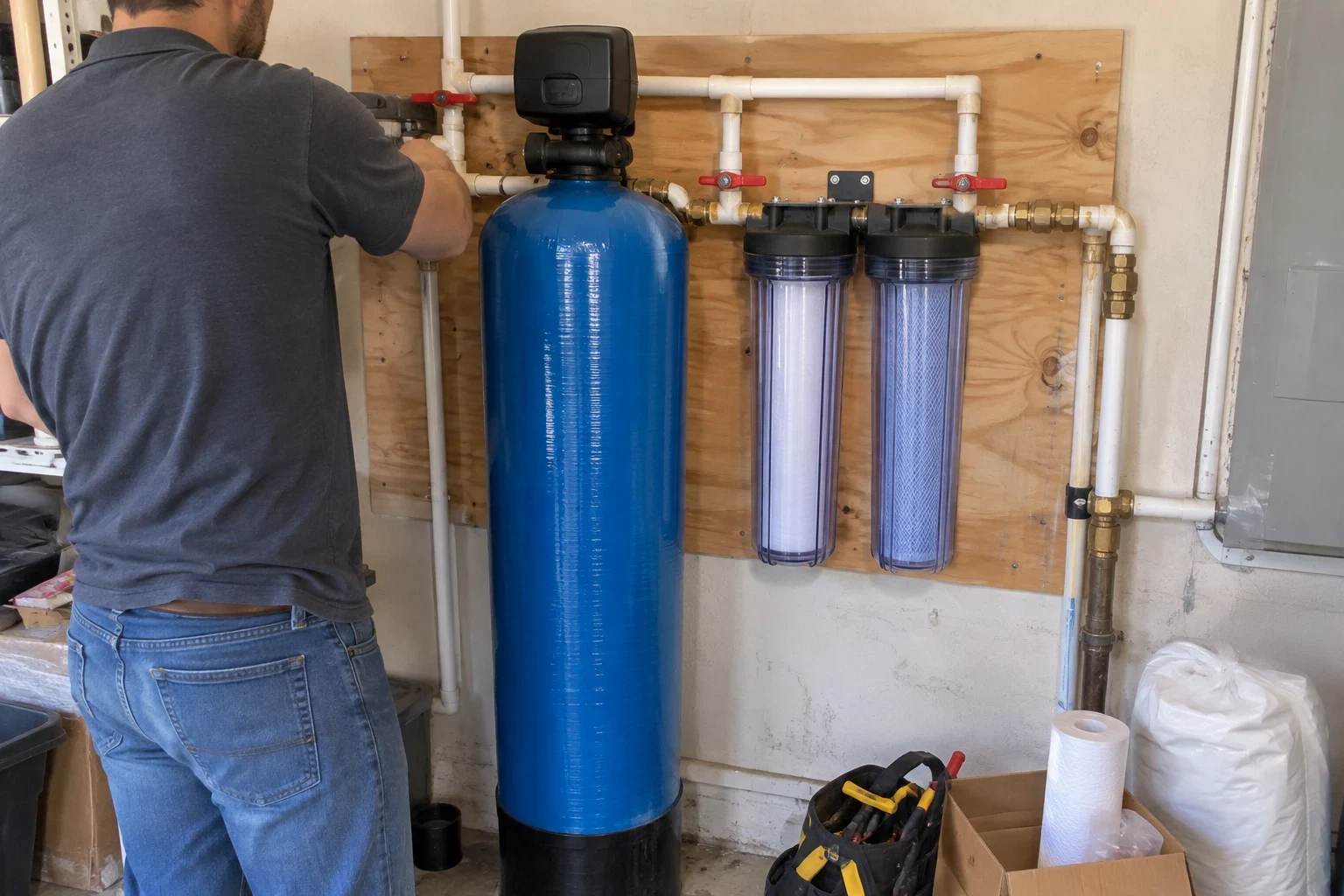
One system that treats every faucet
Whole-home filtration treats water at the point of entry, before your plumbing splits off toward the kitchen, bathrooms and laundry. A sediment stage comes first and catches grit and rust flakes. A carbon tank follows, removing the chlorine or chloramine added for disinfection along with the taste and smell it carries. Every fixture downstream benefits, even the ones people forget, like the shower and the ice maker.
It is the right call when the complaint is house-wide rather than tied to one sink: a chemical smell in the bathroom, skin that feels tight after bathing, or an off taste no matter which tap you use. What it will not do is soften water. Supplies across Central Texas often carry a good deal of calcium from limestone, and carbon leaves that untouched. If hardness turns out to be the bigger concern, we tell you directly and explain salt-free water conditioners or water softener installation.
We keep our crews small on purpose. The person who tests your water also plans the install and comes back for the follow-up, so nothing gets lost passing from a salesperson to someone you have never met.
What comes with a whole-home installation
Testing before any recommendation
Your free water test happens before we talk about equipment. The readings decide the media, the tank size and whether a filter is worth installing in your home at all.
Sediment prefilter housing
A cartridge stage ahead of the main tank catches sand and loose pipe scale. Keeping that grit away from the carbon helps it work better and last longer.
Carbon tank sized for your household
We choose the tank by counting bathrooms and looking at how much water runs at your busiest hour, rather than reaching for a standard model. Where the test finds chloramine, the tank gets catalytic carbon, which handles it far better.
Bypass valve and shutoffs
Every system has a bypass, so you still have water while a cartridge is being changed or a repair is underway elsewhere in the house.
Careful, tidy work
We lay drop cloths on the floor, keep pipe runs neat and square, and take every box and old fitting away with us.
A handoff you can follow
Before we go, we walk you through the bypass and how to check the system, and we leave written maintenance notes.
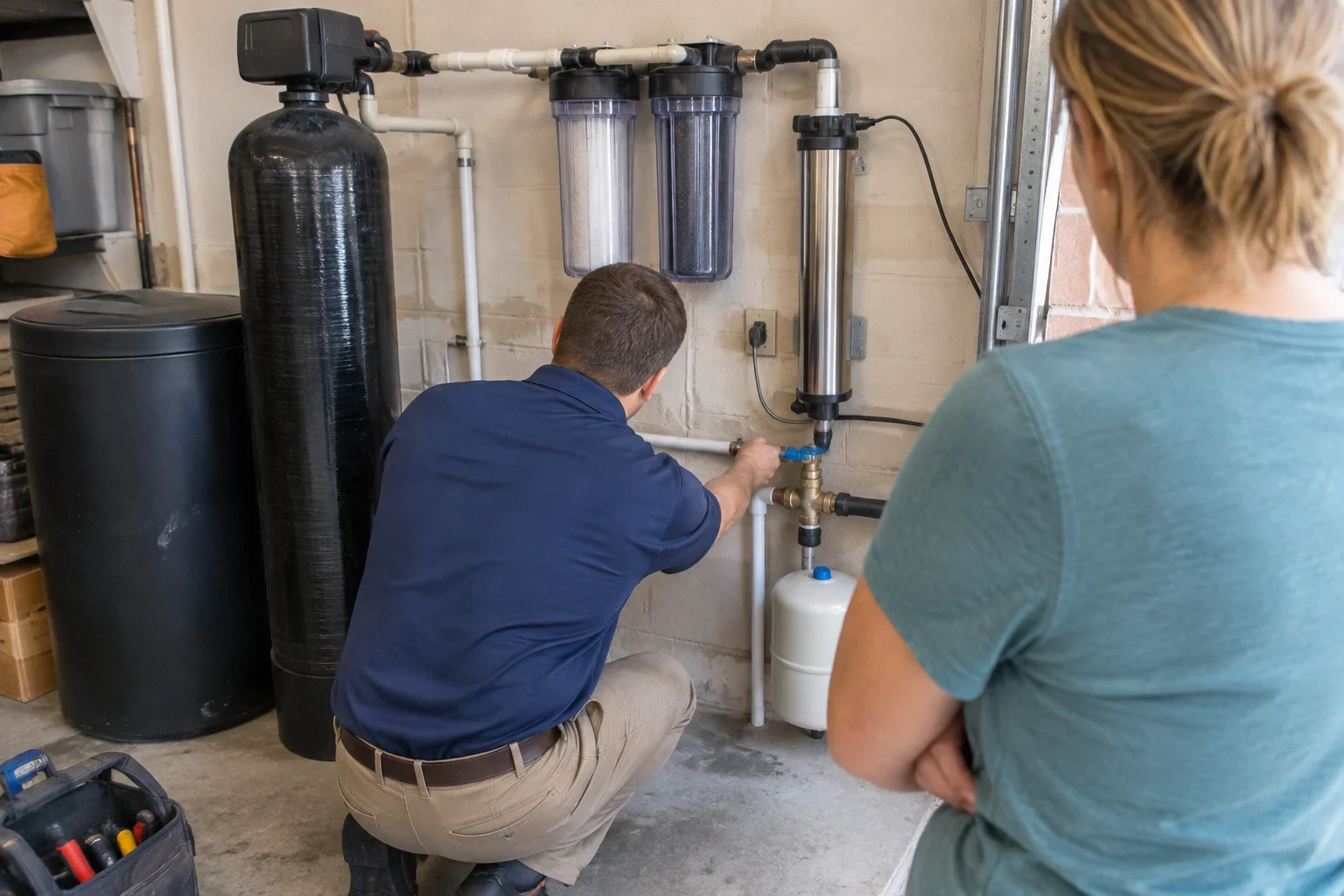
Signs whole-home filtration fits your house
- Bathrooms smell like a swimming pool
- Hot water releases chlorine as vapor, which is why a closed-up bathroom after a shower is where it stands out. A carbon stage at the main line removes it before the water gets to the showerhead.
- Every faucet tastes the same, and not good
- If the bathroom sink tastes just like the kitchen sink, the issue is the water coming in, not one fixture. A single system where the line enters covers them all.
- Skin and hair feel dry after a shower
- Many people notice their skin feels less tight once chlorine is removed from their bath and shower water.
- Specks in aerators and washer screens
- Sand or rust building up in faucet aerators or the washing machine's inlet screen points to sediment. A prefilter catches it before it reaches valves and appliances.
- Only your drinking water is filtered
- A fridge or pitcher filter covers a few glasses a day. Whole-home filtration also reaches cooking water, showers, laundry and the ice maker.
From the first call to the last check
- 1
A call, then a free test
Tell us what you have noticed, and we set a convenient time to test the water in your home. You hear the results in plain language and receive a written quote with every part itemized.
- 2
Mapping the installation
We locate where the main line enters, usually the garage or a utility closet, and plan the pipe route, any drain connection and a tank location that stays easy to reach for service.
- 3
The install itself
The same crew you already met arrives, shuts off the water briefly, plumbs in the system and pressure-tests every joint. Most households are without water for a few hours rather than the whole day.
- 4
Flush, retest and handoff
We rinse the new media, test the water again so you can see the difference, and go over the bypass and upkeep with you. You keep our number for any question that comes up later.
What moves the price of a whole-home system
We price a system once we have seen your water and your plumbing, never before. Installation is free, so the number you get reflects the equipment your home actually needs. Each component is listed on its own line, and nothing is added later without talking it over with you first.
- Bathrooms and peak demand
- A house where two showers and the dishwasher regularly run at the same time calls for a larger tank than a smaller household does. Sizing for that busiest moment keeps the pressure steady on a hectic morning.
- Which carbon media fits
- Regular carbon is effective on chlorine. Catalytic carbon carries a higher price but does a better job on chloramine, and your test results decide which one goes in the tank.
- Where the main line comes in
- A line entering through a garage wall is a simple connection. One that runs under the slab or behind finished drywall needs more plumbing, and adding a drain connection increases the work.
- Combining treatments
- If the test shows scale worth addressing, a salt-free water conditioner can be installed beside the filter, and the quote changes to match. We only suggest it when the numbers support it.
Questions about whole-home filtration
- Does a whole-home filter soften water?
- No. Carbon removes chlorine and the taste and odor that come with it, but calcium and magnesium go right through. If your results show hardness, we explain the options, from salt-free water conditioners to a conventional softener.
- Am I going to lose water pressure?
- Not with a system sized correctly for your home. When pressure does fall off, the usual culprit is a tank too small for the house or a sediment cartridge left in place too long. We size from your real flow and show you how to check the cartridge on your own.
- What upkeep should I expect?
- The sediment cartridge is the part you change most often, and how often depends on how much grit your supply carries. The carbon bed lasts much longer before it needs replacing. We give you a realistic schedule built from your test results and your household's water use.
- Is reverse osmosis still worth adding for drinking water?
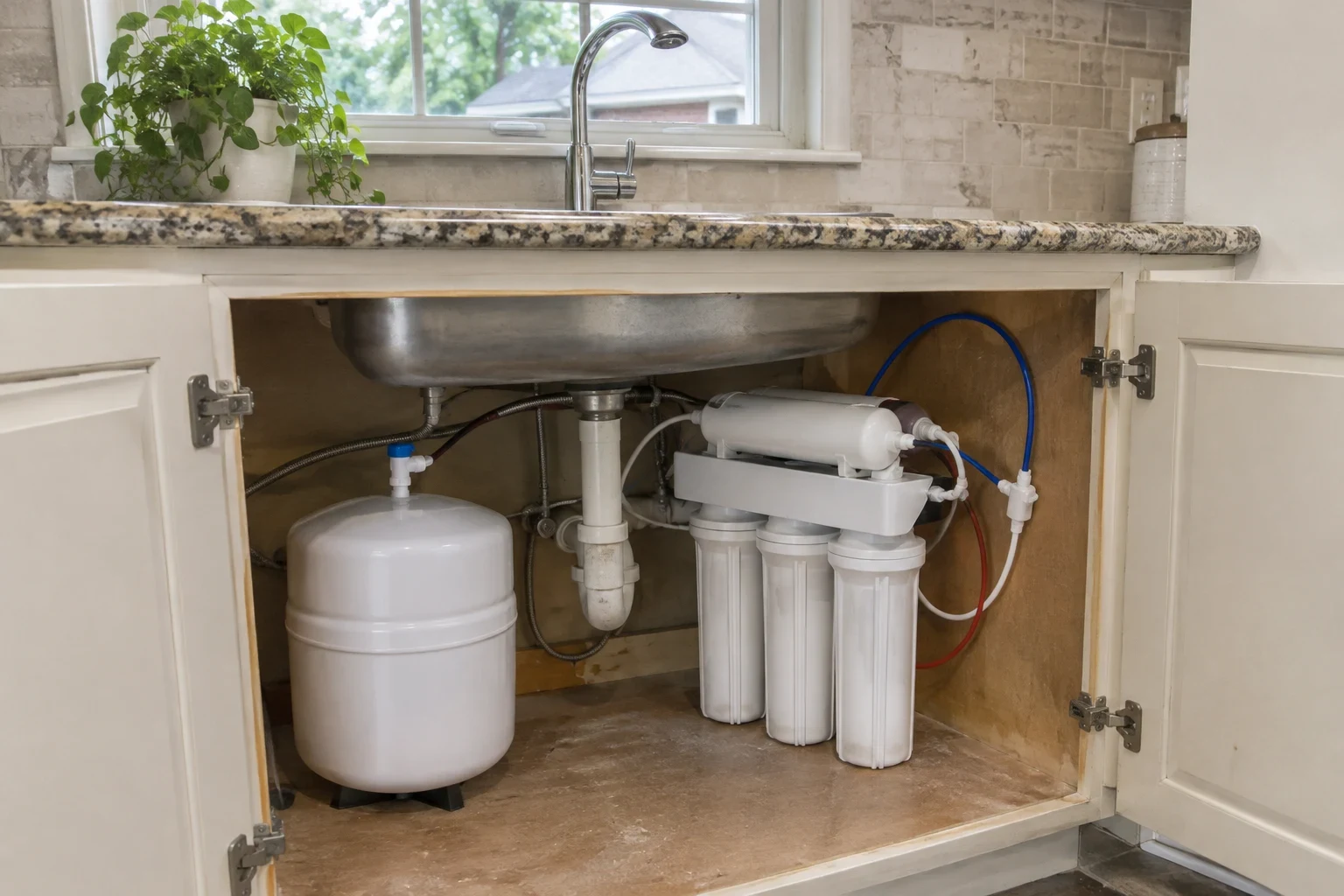
- It can be. Whole-home filtration improves taste at every faucet, while an under-sink reverse osmosis unit in the kitchen removes dissolved solids that carbon does not touch. Some families add one for drinking and cooking, and many are happy with whole-home filtration alone.
- Do the people who test my water also do the install?
- Yes. We keep the team small on purpose, so one crew stays with your job from the first test to the final walkthrough, and you never have to explain your house to someone new.
Let's see what's in your water first
We come to your home, run a free test and give you a straight answer on whether whole-home filtration is worth it, with the quote written out. Installation is free, and the crew you meet is the crew that finishes the job.