ServicesSalt-Free Water Conditioners
Salt-Free Water Conditioners in Georgetown
Hard water leaves chalky deposits in your water heater, on fixtures and inside pipes. A salt-free conditioner changes how those minerals behave so they pass through instead of sticking, with no salt bags, no drain line and no power needed. We test your water before sizing anything for your home.
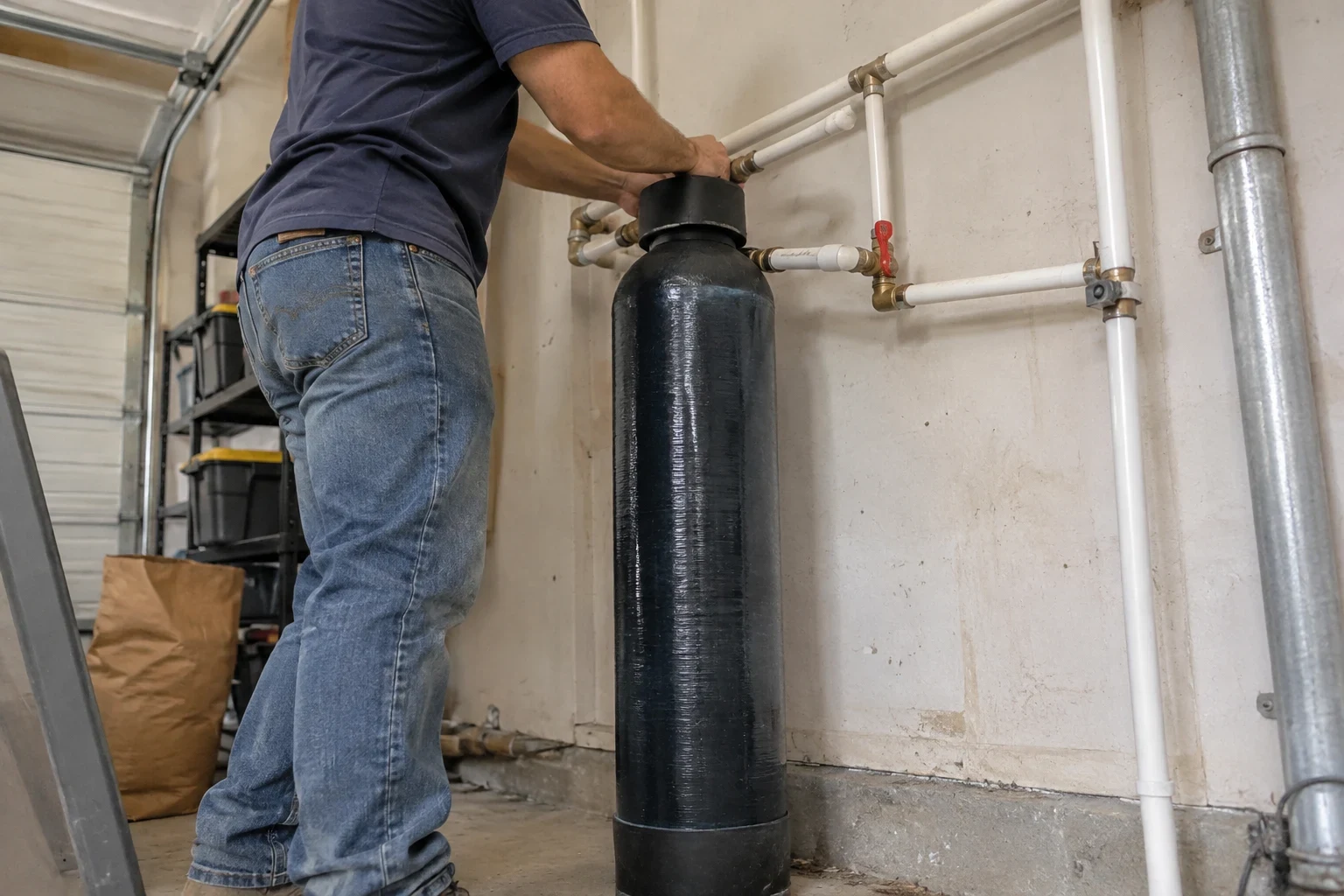
What a salt-free conditioner does, and what it does not
Most of these systems rely on template-assisted crystallization, often shortened to TAC. Inside the tank, the conditioning media gives calcium and magnesium a surface to form tiny, stable crystals. Those crystals ride along with the water rather than clinging to heated metal. Nothing is taken out of the water. The difference is that the minerals no longer build into the hard white layer you find on shower heads, faucet aerators and the floor of a water heater tank.
Be clear about the trade before you choose one. Your water will not take on the slippery feel of softened water, and a hardness test will still read about the same. What you gain is a system with no salt to buy, no regeneration schedule and no brine going down the drain, and it keeps working when the power is out. Water in Central Texas often picks up hardness from limestone, which makes this a sensible option for many homes.
When your goal is to actually pull hardness out of the water, a traditional softener does that job better, and our Water Softener Installation page explains how. After we test, we will tell you plainly which direction your water and your priorities lead.
What your installation includes
- An in-home water test
- We check hardness, chlorine and iron before recommending anything. High iron or manganese can coat conditioning media, so we want those numbers first.
- Sizing to your flow
- Tank size depends on how much water your home draws at once, not just square footage. We count bathrooms and fixtures so pressure stays strong when two showers and the dishwasher run together.
- Sediment and carbon prefiltration
- Chlorine and grit shorten the life of conditioning media. Where your test calls for it, we add a prefilter ahead of the tank, which also improves taste and odor at every tap.
- A bypass valve
- Every system goes in with a bypass so water can be routed around the tank during service without shutting off your home.
- Clean, tidy plumbing work
- We set the tank level, run neat connections, label the valves and leave the garage or utility area as clean as we found it.
Signs a salt-free conditioner may suit your home
White crust on fixtures
Chalky rings on shower heads, faucets and glass doors that come back weeks after cleaning point to hardness minerals settling out.
A noisy or slow water heater
Popping or rumbling from a tank heater often means scale on the bottom. Hot water that takes longer to recover is another clue.
You don't want salt in the routine
If lifting salt bags is a chore, or you prefer not to send brine down the drain, a conditioner removes that task entirely.
No drain or outlet near the main line
Softeners need both. A conditioner needs neither, which can make installation simpler in homes where the line enters far from either.
Short-lived appliances
Dishwashers, ice makers and tankless heaters clogged with mineral deposits sooner than expected are a common sign of scale.
What shapes the price
Salt-free systems vary less in price than many water treatments, but a few things move the number. Installation is free, so your quote reflects the equipment your water actually needs. We explain each line before any work is scheduled.
Tank size and flow rate
Larger homes with more bathrooms need a bigger tank to keep pressure and contact time right.
Prefiltration needs
If your test shows chlorine, sediment or trace iron, a carbon or sediment stage adds to the system but protects the media.
Media and housing
Conditioning media and tank construction differ between manufacturers, and the better-built options hold up longer.
Plumbing at the install point
Pipe size, pipe material and whether a loop already exists change the parts list for tying in.
From the first conversation to a working system
- 1
A short phone conversation
Tell us what you are seeing around the house, and we set a time to visit and run a free water test.
- 2
On-site testing and a clear recommendation
We test at your tap and walk through the results with you. Then we give a straight answer on what your water calls for, which may be a conditioner, a softener or no equipment at all. Your written quote lists every component so you can see what you are paying for.
- 3
Install day with the same faces
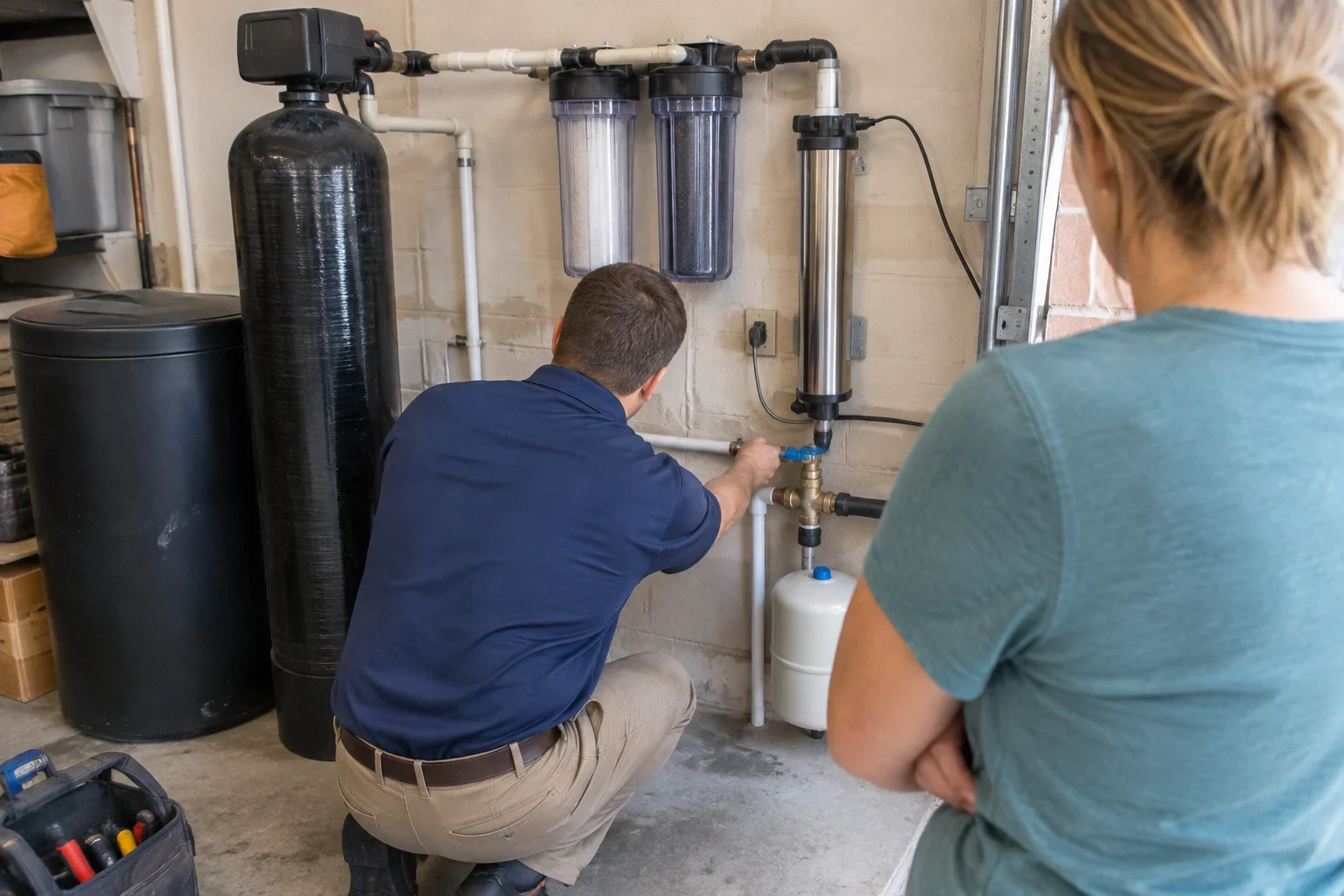
The people who tested your water are the ones who return to install the system. We close the main valve, plumb in the bypass and tank, flush the new media and confirm pressure at several fixtures before packing up.
- 4
After the install
Before we leave, we show you how the bypass works and where the prefilter sits, and we note when cartridges will need replacing. Later questions come back to the same small team, so you always know who you are talking to.
Questions about salt-free conditioners
Will my water feel softer?
Not really. Softened water feels slick because the minerals are removed and replaced with sodium. A conditioner leaves the minerals in, so water feels about the same. The difference shows up as less scale over time.
Will I still get spots on glass and dishes?
Some, yes. When a drop of water evaporates, the minerals in it are left behind. Spots usually wipe away more easily, but if spot-free glass is your main goal, a softener is the better fit.
What upkeep does it need?
Very little. Any prefilter cartridge gets changed periodically, and the conditioning media is replaced after several years depending on your water and usage. There is no salt, no programming and no regeneration cycle.
Is it better than a water softener?
Neither is better across the board. A conditioner suits people who want scale control with no salt and almost no maintenance. A softener suits very hard water or anyone who wants that soft feel. Your test results usually make the choice clear.
Does it remove chlorine or improve taste?
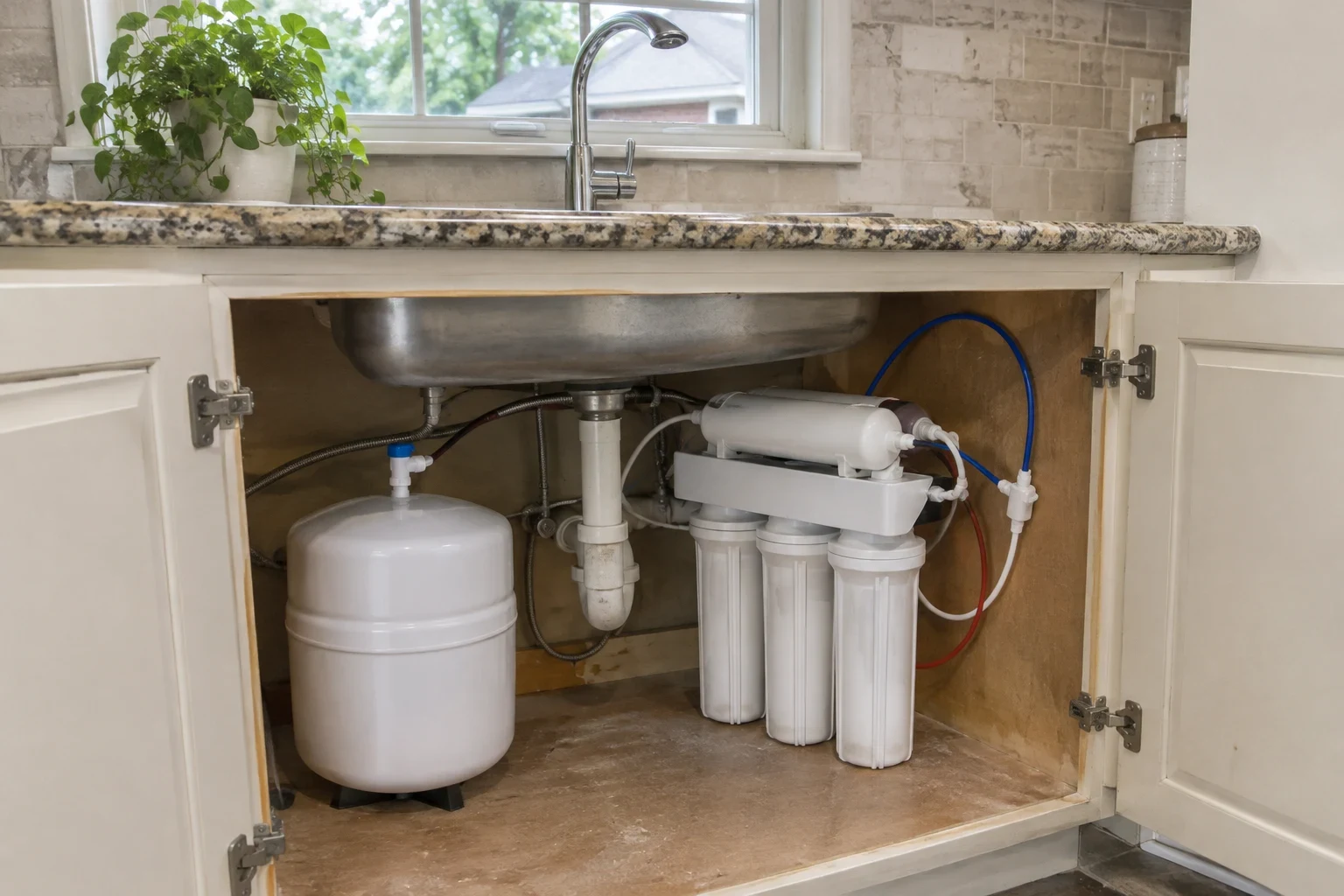
The conditioning media itself does not. That is why we often pair it with a carbon prefilter, or recommend Whole-Home Filtration or a Reverse Osmosis system for drinking water if taste is part of the concern.
Start with a test of your water
We come to your home, test your water and tell you honestly whether a salt-free conditioner is the right choice. The same people carry the job through to the end.