ServicesIron and Sulfur Removal
Iron and Sulfur Removal in Georgetown
Rust-colored stains on fixtures and a smell like rotten eggs at the tap both have clear causes. We test your water, find out which one you are dealing with, and install a filter matched to the actual levels, with the same small crew from first visit to final check.
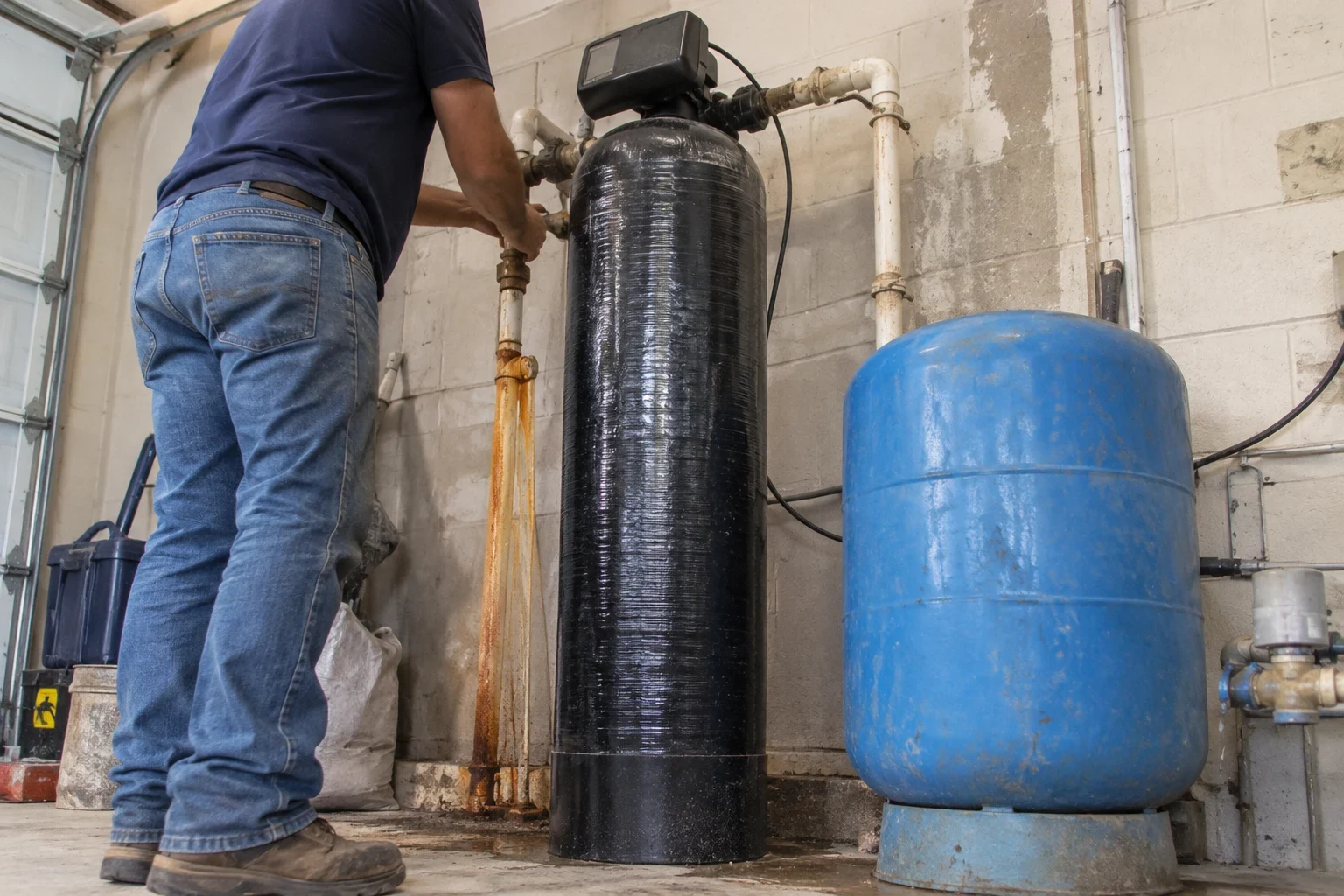
What iron and sulfur do to your water
Iron shows up as orange or brown streaks in sinks, toilets and showers, a metallic taste in coffee, and laundry that comes out dingy. Hydrogen sulfide gas is the one you smell: a rotten-egg odor that is strongest when water first runs. Neither usually makes water unsafe at typical levels, but both are hard to live with and hard on fixtures.
The fix depends on what is in the water and how much. Dissolved iron passes through as clear water and only turns orange after it meets air, so it can hide in a glass and still stain a tub. Sulfur levels can swing with the season. That is why we test before recommending equipment, and why we size the system to your numbers instead of a catalog default.
Our crew is small on purpose. The people who test your water are the people who install the filter and come back to check it, so nothing gets lost between a salesperson and an installer.
What the work includes
- Water test before any proposal
- We measure iron, hydrogen sulfide, manganese, pH and hardness. pH matters most here, because it decides which filter media will actually work. You see every result and what it means before we recommend anything.
- Hot or cold source check
- When the odor comes only from hot taps, the water heater is usually the source, since its anode rod can react with the water stored inside. We rule this in or out first, so you never pay for a filter that would leave the smell in place.
- Filter matched to your levels
- For most homes that means an air-injection oxidation filter, which turns dissolved iron and sulfur into particles a media bed can trap. Catalytic carbon handles sulfur odor well, and heavier levels may need a feed system ahead of the tank.
- Careful installation
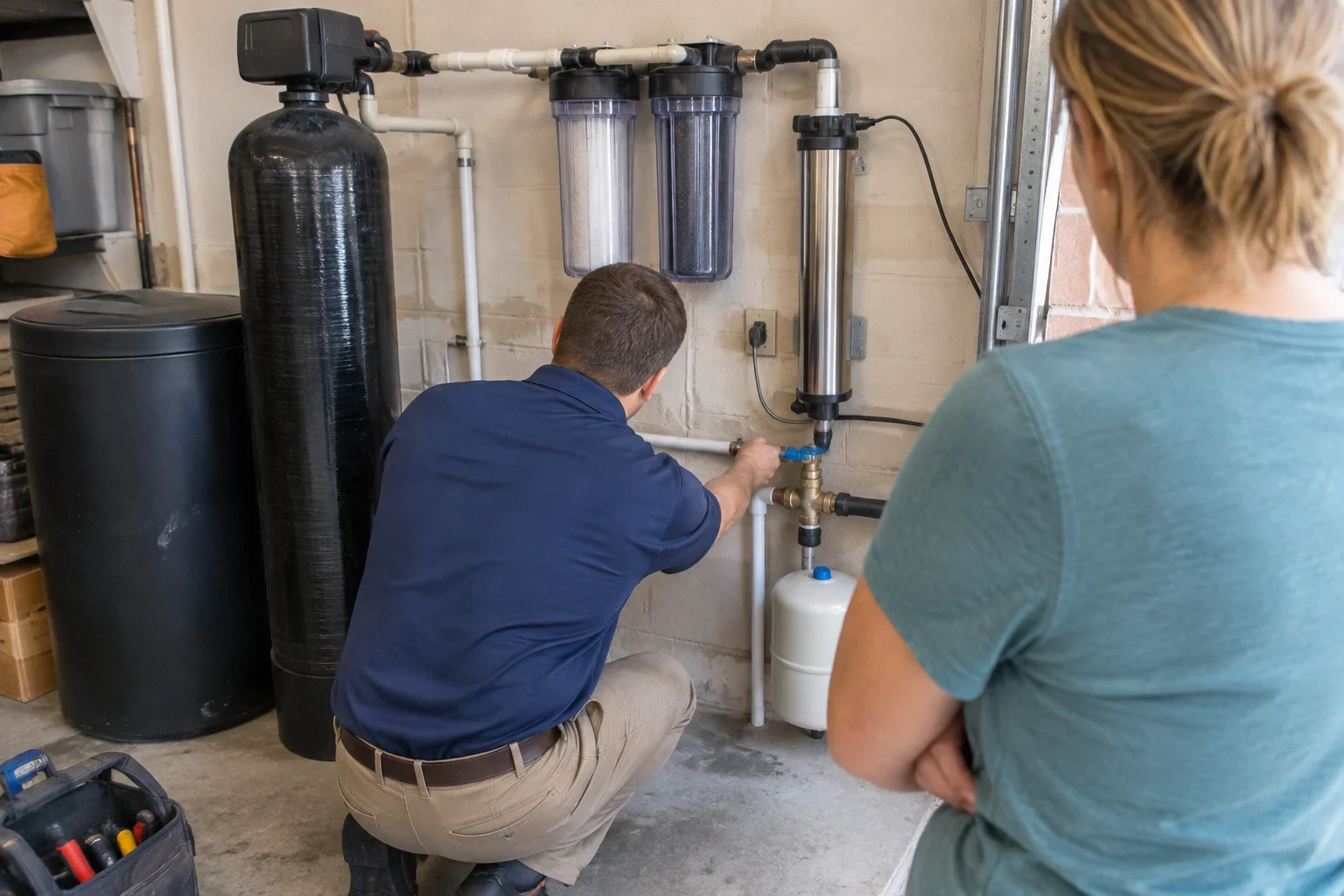
- We fit the system at your main line with a bypass valve, route the backwash line to a proper drain and confirm a nearby outlet for the control valve. Floors are covered and the area is cleaned before we leave. Installation is free.
- Programming and a walk-through
- We set the backwash schedule for your water use and show you how to bypass the system and read the control head.
Signs your water needs iron or sulfur treatment
Rust-colored marks
A ring at the toilet waterline, a rusty streak below a faucet or a tinted shower pan usually means iron, even when a glass of water looks perfectly clear.
A rotten-egg smell
A sulfur odor when you first run a tap is hydrogen sulfide. Noting whether it comes from hot, cold or both taps helps us narrow the cause quickly.
Metallic taste
Coffee and tea that taste off or look darker than they should often trace back to dissolved iron.
Dingy laundry and faded whites
Iron works its way into fabric during the wash, and adding bleach tends to set the stain rather than lift it.
Black specks or slime
Dark grit in aerators or a slick film in the toilet tank can mean manganese or iron bacteria, which call for a different approach than plain iron.
What affects the cost
Free installation covers the labor of fitting the system. Your quote moves with the equipment your water actually needs, and we walk through each line with you before you decide.
Iron and sulfur levels
Modest readings can usually be handled by one oxidation or catalytic carbon filter. Heavy readings may call for a bigger tank or a feed system installed ahead of it.
Water chemistry
Manganese or a low pH reading can change which media we use. Some homes need the pH raised before the iron filter can do its job.
Household flow and size
A home with more bathrooms draws more water at peak times, so it needs a larger tank to keep pressure steady when the shower and washer run together.
Plumbing and drain access
The job stays straightforward when the main line has open space beside it and both a drain and power are within easy reach. Rerouting pipe or running a long drain line adds materials to the quote.
How the job runs
- 1
A call and a free test
You describe what you are seeing and smelling, and we arrange a water test at your home. We look at where your main line enters and where a filter could sit.
- 2
Results and a written recommendation
We go over the numbers with you and recommend one system, explaining why it fits and what upkeep it needs. If the test shows the water heater is the real issue, we tell you that plainly.
- 3
Installation day
The same crew arrives, shuts off water briefly, plumbs in the filter with a bypass, connects the drain line and runs the first backwash. Most homes have water back on within a few hours.
- 4
Follow-up check
After the media has settled in, we retest and confirm the iron and odor are gone at your taps, then adjust settings if needed.
Common iron and sulfur questions
Is water with iron or a sulfur smell a health concern?
In most homes the problem is day-to-day: stained fixtures, a strange taste and a smell no one wants near the kitchen. At typical household levels, iron and hydrogen sulfide alone are seldom a health concern. Once in a while a strong sulfur smell signals something else, which is part of why we test before deciding anything. If a figure on your report needs a closer look, we tell you straight.
Why does the rotten-egg smell come only from the hot water?
Usually the water heater is creating it, as the anode rod reacts with water held in the tank. A whole-home filter alone will not fix that. We look for this during the visit and explain what we found before recommending equipment.
Can a water softener take out iron?
A softener copes with a small amount of dissolved iron, but over time the iron coats and clogs the resin, and it does nothing for sulfur smell. When iron is the main issue, a dedicated iron filter ahead of any softener works better and keeps the softener protected.
What maintenance does the filter need?
Most systems flush themselves with an automatic backwash on a schedule we set, carrying the trapped iron and sulfur to the drain. The media bed is replaced every several years, depending on your levels and water use. At install we show you what to watch for.
Does the filter reduce water pressure?
When it is sized right for your home, you should not notice a drop. That is why we match the tank to your household's flow and check pressure at your fixtures before leaving.
Find out what is staining your fixtures
A short call sets up a free water test at your home. From there you get a clear recommendation, a quote and the same crew from start to finish.