ServicesWater Softener Installation
Water Softener Installation in Georgetown
Before we suggest any softener, we measure the hardness coming into your home. From those numbers we choose the capacity, install the unit on your line and show you how it runs. One small crew handles every step, so the person who read your results is the one doing the work.
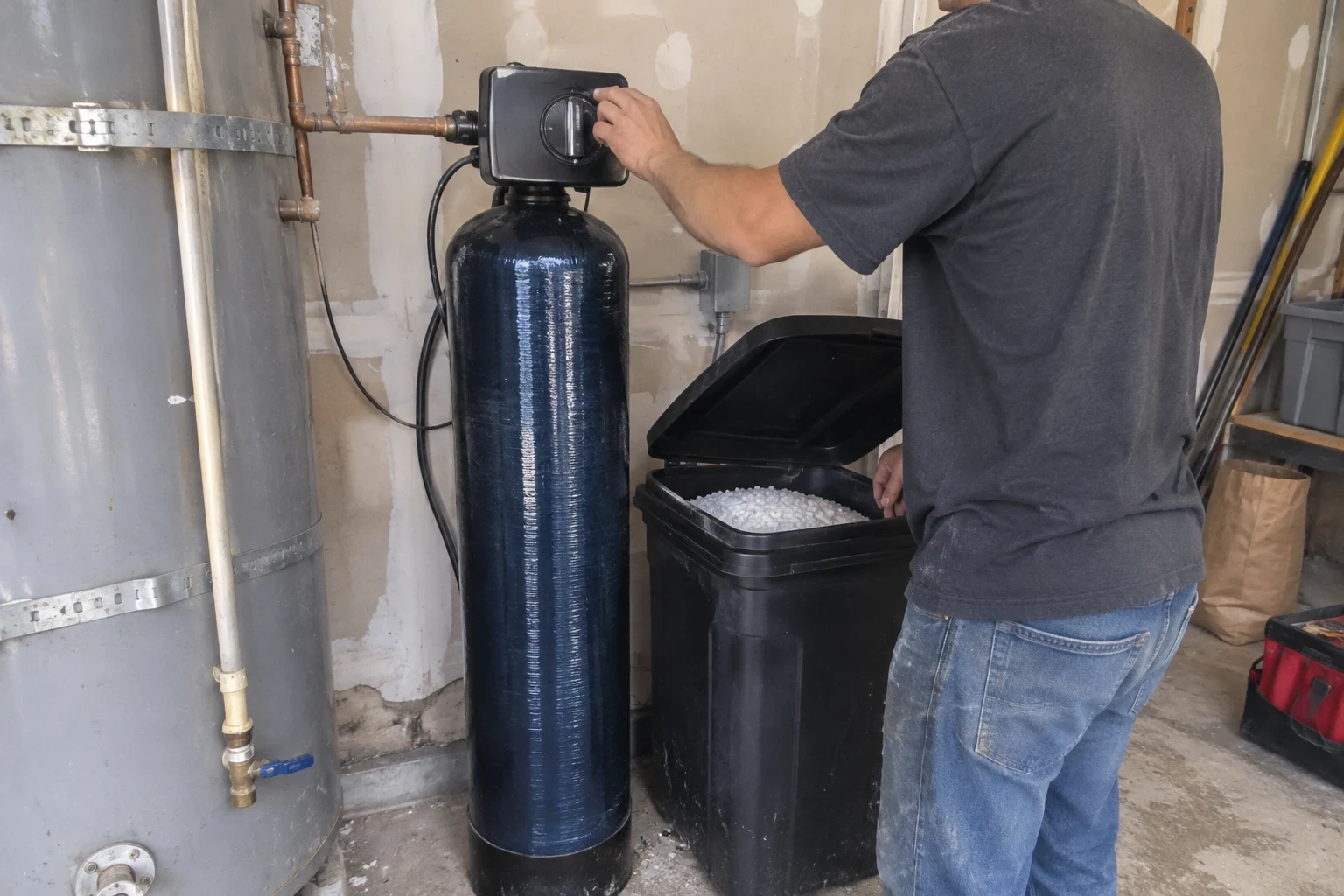
When a softener is the right fit
Hard water holds calcium and magnesium. Those minerals cause the white crust on faucets, cloudy glassware and scale inside water heaters and appliances. A softener takes them out through ion exchange: water flows through resin beads that grab the hardness minerals, and every so often the valve flushes the beads with salt solution to recharge them.
Much of the water in Central Texas passes through limestone, so hard water is a frequent complaint, but we always test before suggesting equipment. If your results point another way, such as a salt-free water conditioner or whole-home filtration for taste and odor, we say so plainly.
We keep the crew small by choice. Whoever reads your results also does the install, so the sizing and the work come from someone who already knows your home.
What your softener installation covers
Testing hardness and iron
We measure hardness and iron at your tap before picking any equipment. Iron can foul the resin over time, and it may shift our recommendation.
Capacity matched to your household
We set grain capacity from your hardness, the number of people at home and your heaviest water use. An undersized unit recharges too often and wastes salt, and an oversized one is capacity you pay for without using.
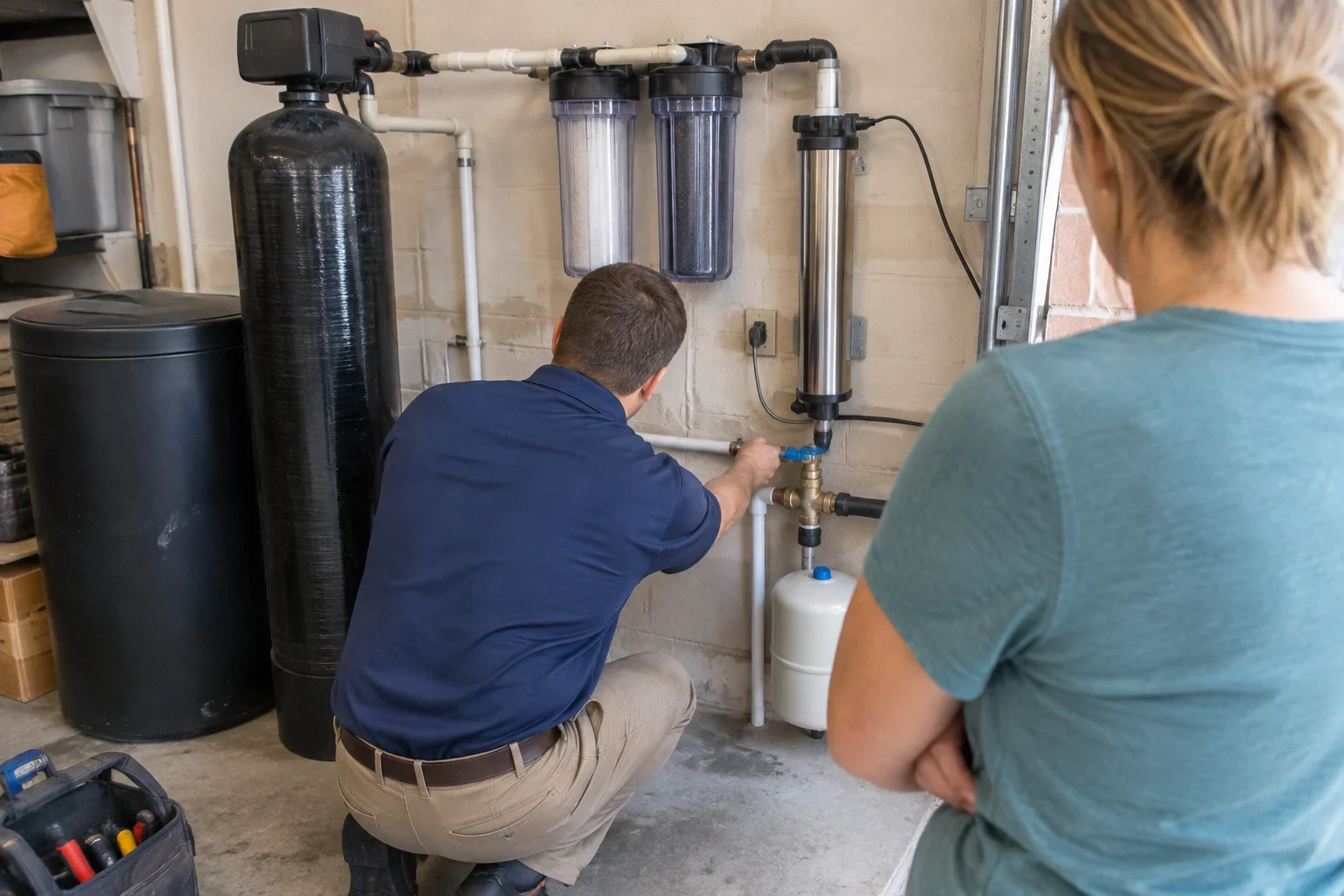
Connection with a bypass valve
The softener is tied into your main line or an existing loop, with a bypass valve beside it. Should the unit need service, a single turn routes water around it so your taps and fixtures keep working.
Brine tank and drain line
The drain line gets a correct air gap so wastewater cannot flow back into the system. We then set the brine tank, load the first salt and test the float and overflow.
Programming and a walkthrough
We set the control valve for your hardness and household size, then show you how to add salt, check the level and work the bypass. The area is left clean with every fitting dry.
How hard water shows up around your home
- Scale around faucets and showerheads
- A pale, gritty buildup where water collects and dries is mineral left behind. It comes back within days of cleaning.
- Spotted glasses and dishes
- A cloudy film on glassware straight out of the dishwasher is usually mineral residue rather than a detergent issue.
- Soap that will not lather
- Hardness binds with soap, so you use more shampoo for less foam and still feel a film on skin and hair. Glass shower doors turn a dull gray.
- Crackling from the water heater
- Sediment settles as a crusty layer at the bottom of a tank heater, and it pops and rumbles as the water heats. The heater works harder for the same hot water, which can shorten its life.
- Stiff, dull laundry
- Minerals lodged in the fabric leave towels scratchy and fade colors sooner, even with extra detergent.
How a softener job runs
- 1
Test and talk
We visit, test your water and look at where the line enters your home. You get a plain explanation of the results and whether a softener is the right answer.
- 2
A written recommendation
We give you the unit size, valve type and any extra parts the job needs, itemized, so you know exactly what you are agreeing to.
- 3
Installation day
The same crew arrives, protects the floor around the work area and shuts off water only for as long as the connection takes. Most installs are finished within part of a day.
- 4
Startup and handover
We run a regeneration cycle, check for leaks at every joint and retest softened water at a faucet. Then we walk you through salt, settings and the bypass.
What shapes the price of a softener
Installation is free on every softener job, so your quote mostly covers the equipment and any plumbing your home needs to receive it. We list each part on its own line. These are the pieces that move the total.
- Capacity
- Harder water and a bigger household need more resin and a taller tank. We size from your test results rather than reaching for the largest unit available.
- Control valve type
- A metered valve tracks gallons used and recharges only when the resin is nearly exhausted, which saves salt. A timed valve costs less up front but recharges on a fixed schedule whether the resin needs it or not.
- Existing loop or new plumbing
- Plenty of Georgetown houses from recent decades came with a softener loop already roughed in, usually by the garage. If yours has no loop, we cut into the main line instead, which means extra pipe and fittings on the quote.
- Pre-filtration
- If the test shows iron or sediment, a pre-filter ahead of the softener protects the resin. If chlorine taste is the bigger annoyance, a carbon stage may be worth adding.
Questions people ask about softeners
- How is a softener different from a salt-free conditioner?
- A softener removes the hardness minerals, so spotting fades and soap foams more readily. A salt-free water conditioner keeps those minerals in the water but alters their form so they cling less to pipes and heating elements. If spots and soap use are your main frustration, a softener does more. If scale protection without hauling salt is the goal, a conditioner may suit you better.
- How much salt will my softener go through?
- It varies with your hardness, the size of your household and how the valve is set. Plenty of homes use one or two bags a month. We show you how to look inside the brine tank so you can keep the salt above the water line without guesswork.
- Is softened water okay to drink?
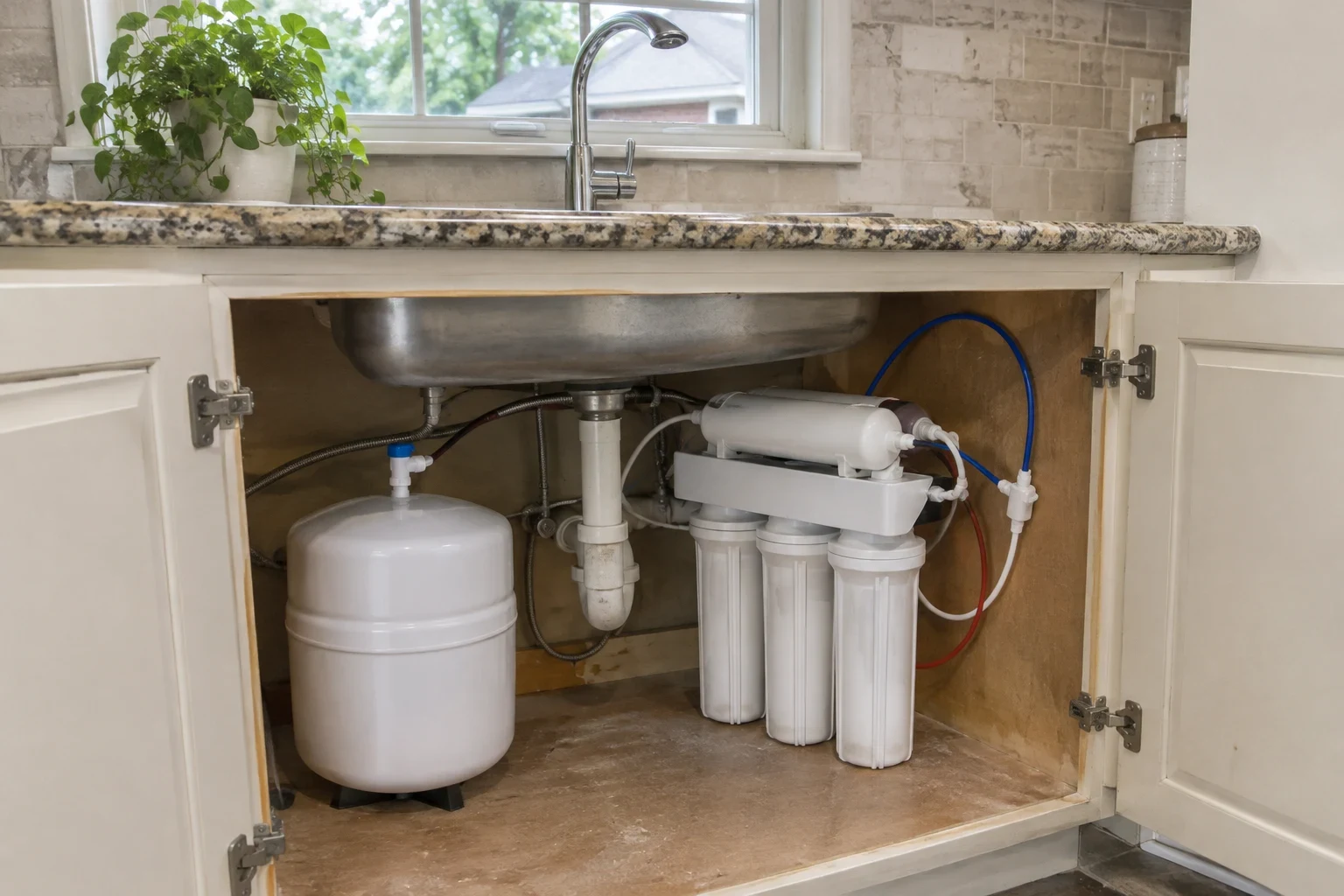
- Softening swaps the hardness minerals for a small amount of sodium. If you would rather avoid that, we can leave the kitchen cold line unsoftened or fit a reverse osmosis system under the sink for drinking and cooking water.
- Does softened water go to my outdoor faucets?
- Usually it does not. We prefer to leave hose bibs on untreated water so salt is not wasted on the lawn. On the first visit we check how your lines are laid out.
- Will I deal with someone new at each stage?
- No. Our crew is small, so whoever tests your water also installs and sets up the softener. If a question comes up later, you reach someone who already knows your system.
Start with a test of your water
We will measure your hardness, tell you honestly whether a softener makes sense and give you a clear quote. Installation is free, and the same people handle your job from first visit to final check.