ServicesWell Water Filtration
Well Water Filtration and Treatment in Georgetown
Water from a private well reflects the rock it passes through, and it can change from season to season. We test your well first, then fit a filtration setup sized to what the results show. The same small crew stays on your job from sampling to the final check.
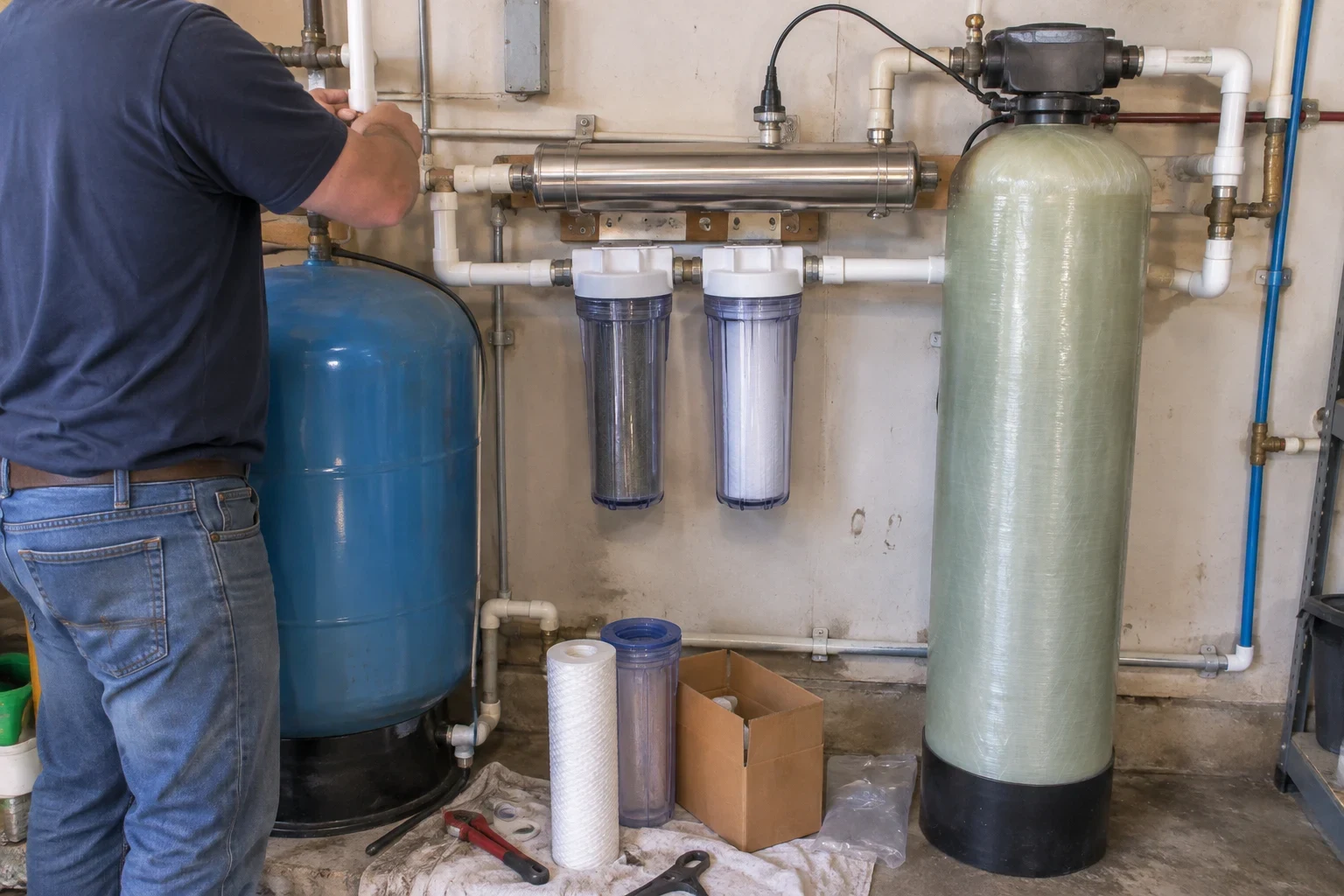
Filtration built around your well, not a catalog
A well system is a sequence of equipment placed where water enters your home. It usually starts with a sediment stage to catch sand and grit. Then come the stages your test calls for: iron and sulfur removal, softening or conditioning for hardness, carbon for taste and odor, and UV disinfection when bacteria are a concern. The order matters. Each stage protects the next, and a system assembled out of sequence wears out media early and still lets problems through.
With a private well, nobody tests the water for you. Wells around Georgetown often draw through limestone, which tends to bring hard minerals, and some also show iron, a sulfur smell or cloudiness after heavy rain. We do not assume any of that applies to yours. We test, explain the numbers in plain terms and recommend only the stages the water actually needs.
Because we keep a small crew, the person who takes your sample is the person who walks you through the results and the person who installs the equipment. You are not repeating your story to someone new at every step.
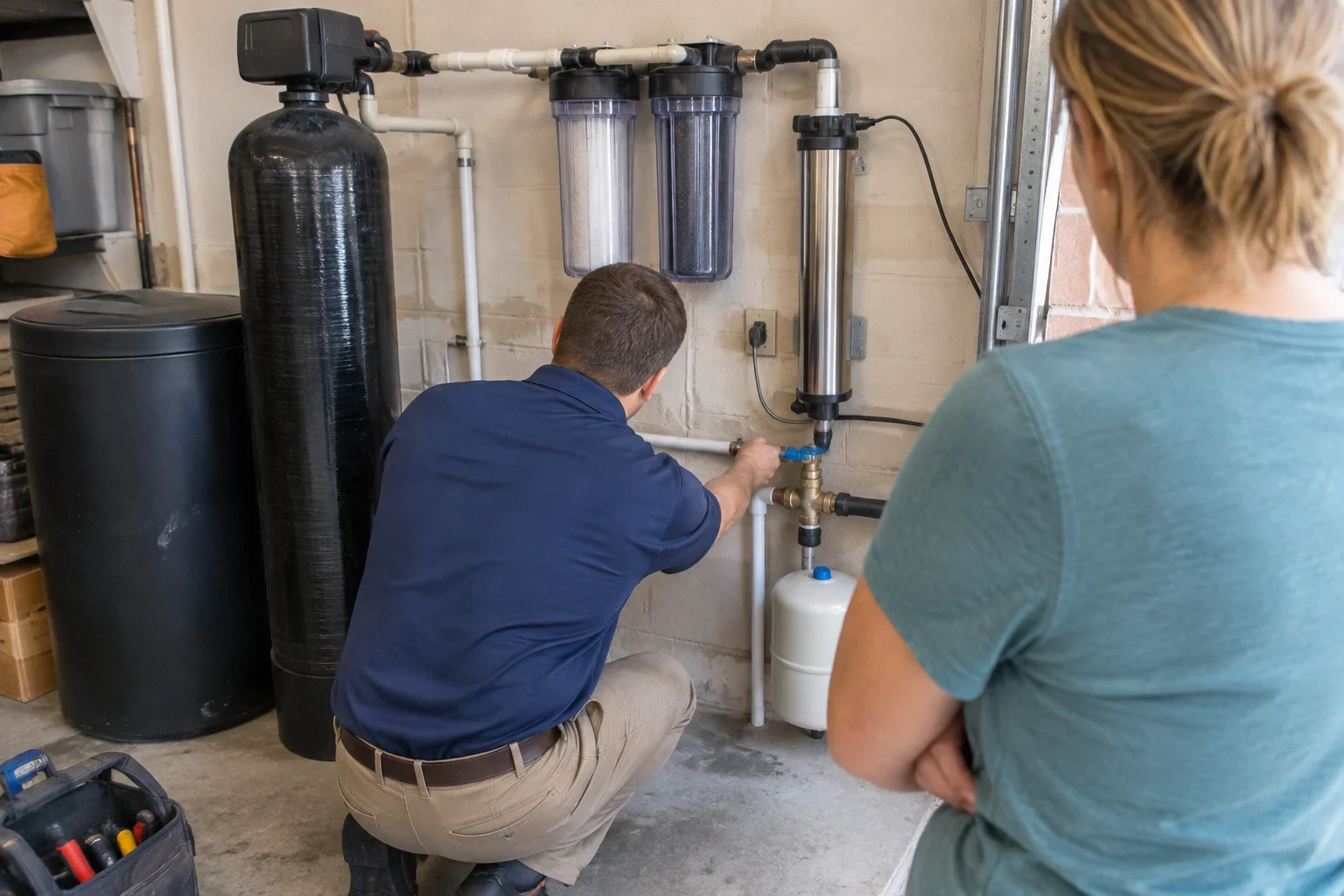
What the work includes
- 01
A proper water test
We sample from a cold tap close to the pressure tank and check hardness, iron, manganese, pH, sulfur odor and sediment. When bacteria are a question, we arrange a lab sample so the result is reliable.
- 02
Sediment prefiltration
A sediment stage goes in first. It keeps grit out of valves and media downstream and protects fixtures and appliances in your home.
- 03
Stages matched to the results
Depending on the test, that may be an iron and sulfur filter, a water softener or salt-free conditioner, and a carbon stage for taste. We explain why each one is there before anything is ordered.
- 04
UV disinfection where it is needed
If the lab finds bacteria, a UV unit goes last in the line, after the water is clear enough for the light to work. We size it to your flow rate so water is not rushed past the lamp.
- 05
Careful, serviceable plumbing
Every system gets a bypass valve, pressure gauges before and after the filters and a sample port so the water can be retested easily. Lines are run square and supported, and drain connections are made neatly.
- 06
A walkthrough before we leave
We show you the bypass, how to read the gauges and when each cartridge, lamp or media bed is due, and we leave the schedule in writing.
Questions about Well Water Filtration?
Call(512) 706-9279When a private well is telling you something
Rust marks in the tub or toilet
A reddish ring at the waterline or tinted laundry usually means dissolved iron is reaching your fixtures. Manganese leaves a darker stain, closer to black.
A rotten-egg odor
Hydrogen sulfide causes that smell. When it shows up mostly from the hot side, the water heater can be the source rather than the well, and testing sorts out which.
Haze after a storm
Water that turns hazy or gritty after heavy rain can mean surface water is finding its way into the well. That calls for a bacteria test before any filter is chosen.
Chalky buildup on fixtures
Crust on showerheads, faucets and the kettle comes from hard minerals, and the same scale shortens the life of a water heater.
Weakening pressure
Grit collects in aerators and older filter housings until flow drops. A sediment stage sized to your flow usually brings it back.
A test you cannot date
Well water shifts over the years. If your last test is a hazy memory, or you just moved into a home on a well, testing is the first step.
How a well filtration job runs
- 1
The call and the free test
You call, describe what you are seeing and we set a time for a free water test. We look at the pressure tank, the plumbing and the space available for equipment while we are there.
- 2
Results and a written quote
We go over the results with you and give you a written, line-item quote. If the water only needs a sediment filter, that is what we will tell you.
- 3
Installation day
We lay down floor protection, shut off the well and fit the system in sequence. Most jobs finish within the day, with water off only while connections are made.
- 4
Start-up and retest
We flush each stage, check pressure before and after the system and take a fresh sample so you can see the change. Cleanup is done before we leave.
What shapes the cost
We offer free installation, so your quote reflects the equipment your water actually needs. Two homes on neighboring wells can need very different systems. The test sets the direction, and the factors below decide the size.
- What the test finds
- Sediment alone needs one stage. Iron, sulfur, hardness and bacteria together call for several, and each adds equipment.
- Flow rate and household use
- A larger home with more bathrooms needs equipment sized to deliver full pressure when several taps are running.
- Space and existing plumbing
- A cramped utility room or aging galvanized pipe adds work. So does a pressure tank tucked where the new equipment has to reach around it, since that usually means more fittings and some rerouted line.
- Power and drain access
- UV units need an outlet, and backwashing filters need a drain. Having both nearby keeps the work simpler.
- Ongoing upkeep
- Cartridges, UV lamps, salt and media all have a service life. We tell you what to expect so the running cost is clear before you commit.
Common questions about private well filtration
Could I skip testing and choose a system myself?
We recommend against it. Picking equipment without results usually means paying for stages you do not need while missing the one you do. The test is free, and everything we recommend is based on it.
Will my well water be safe to drink once it is filtered?
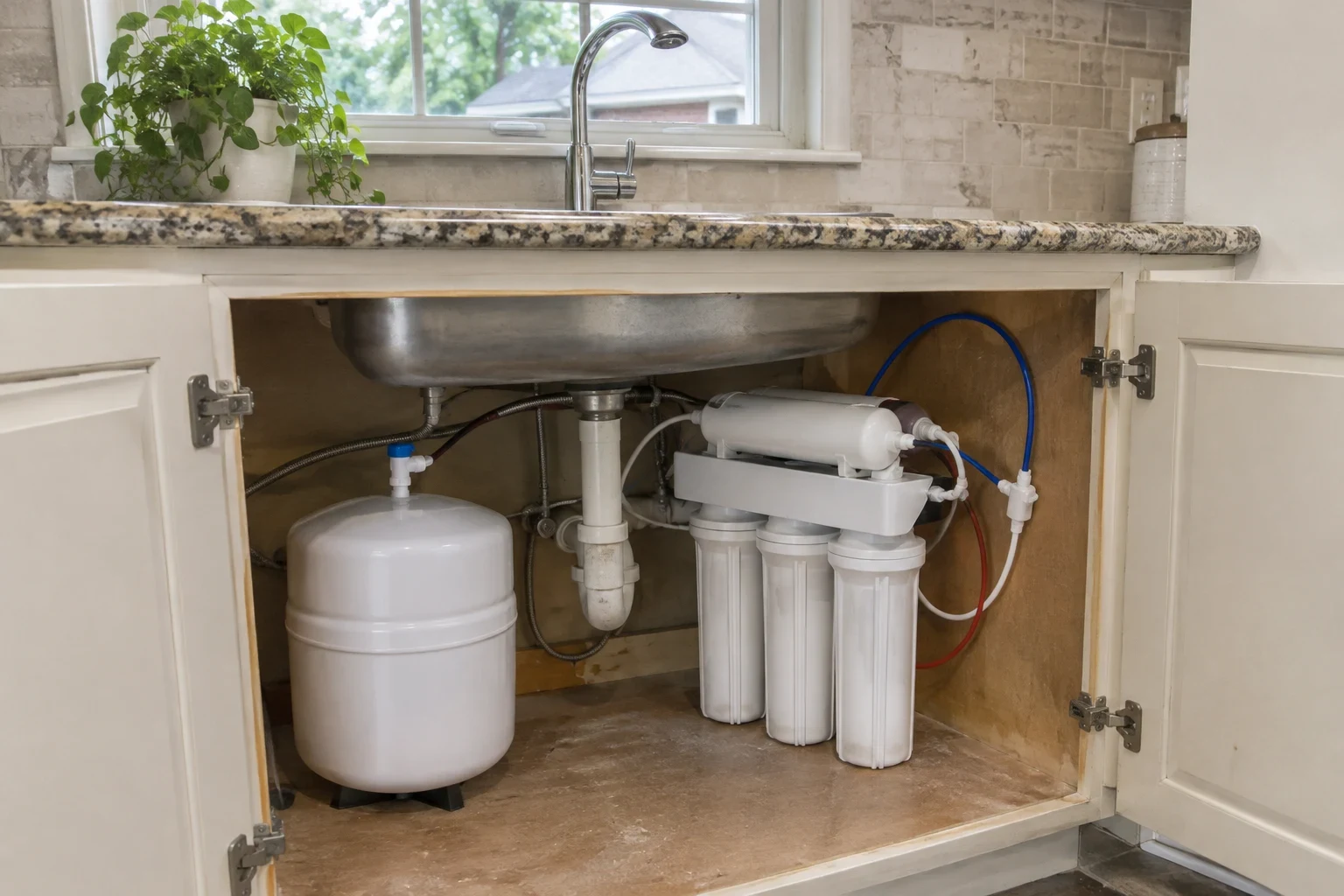
It depends on what is in the water. UV disinfection handles bacteria, and a reverse osmosis system under the kitchen sink adds another layer for drinking and cooking water. We sample again after installation, so you see the results in writing rather than taking our word.
Does a filtration system reduce water pressure?
With properly sized equipment, any drop should be small. Most pressure problems come from undersized housings or cartridges kept in too long. The gauges we install show you when a filter needs changing.
What kind of upkeep is involved?
Sediment cartridges typically get changed every few months, depending on how much grit comes from your well. UV lamps are usually replaced once a year, and filter media lasts far longer. We put the schedule in writing and can take care of service visits if you like.
My well water seems different lately. Should I test again?
Yes, that is wise, especially after flooding, nearby construction or any work done on the well. A yearly test is a good habit for a private well.
Can you use the equipment already in my home?
Often, yes. We check the condition and sizing of your existing equipment, keep what still works and replace only what is worn out or no longer suits your water.
Start with what is actually in your well
One call gets you a free water test and a straight answer about what your well needs. The same crew follows your job from the sample to the final check.