ServicesReverse Osmosis Systems
Reverse Osmosis Systems in Georgetown
Reverse osmosis gives you clean, clear water for drinking, coffee and cooking, delivered from a dedicated faucet at your kitchen sink. We test your water first, recommend the right system for it, and the same small crew stays with your installation from the first visit to the final check.
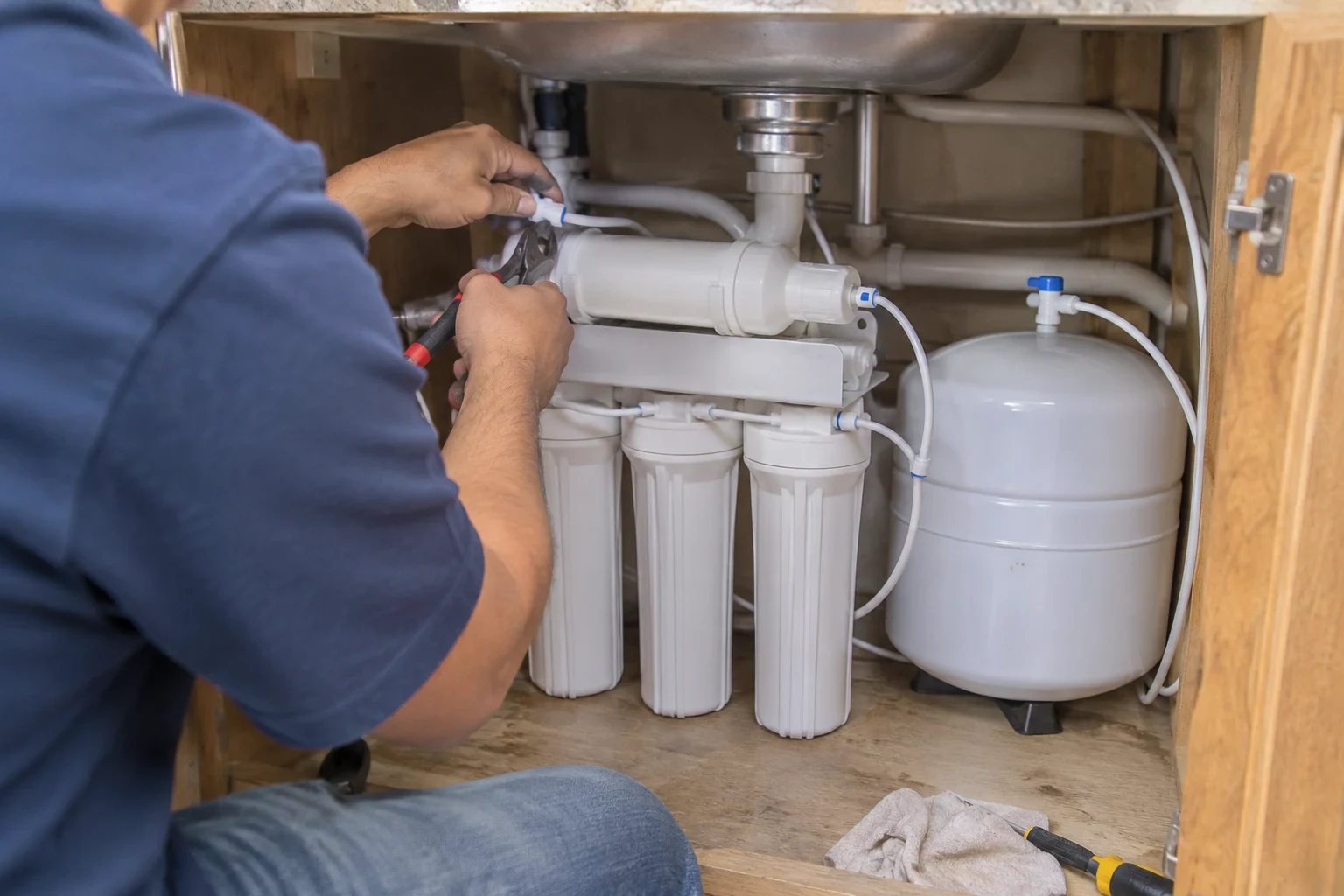
Cleaner water for the glass, the pot and the coffee maker
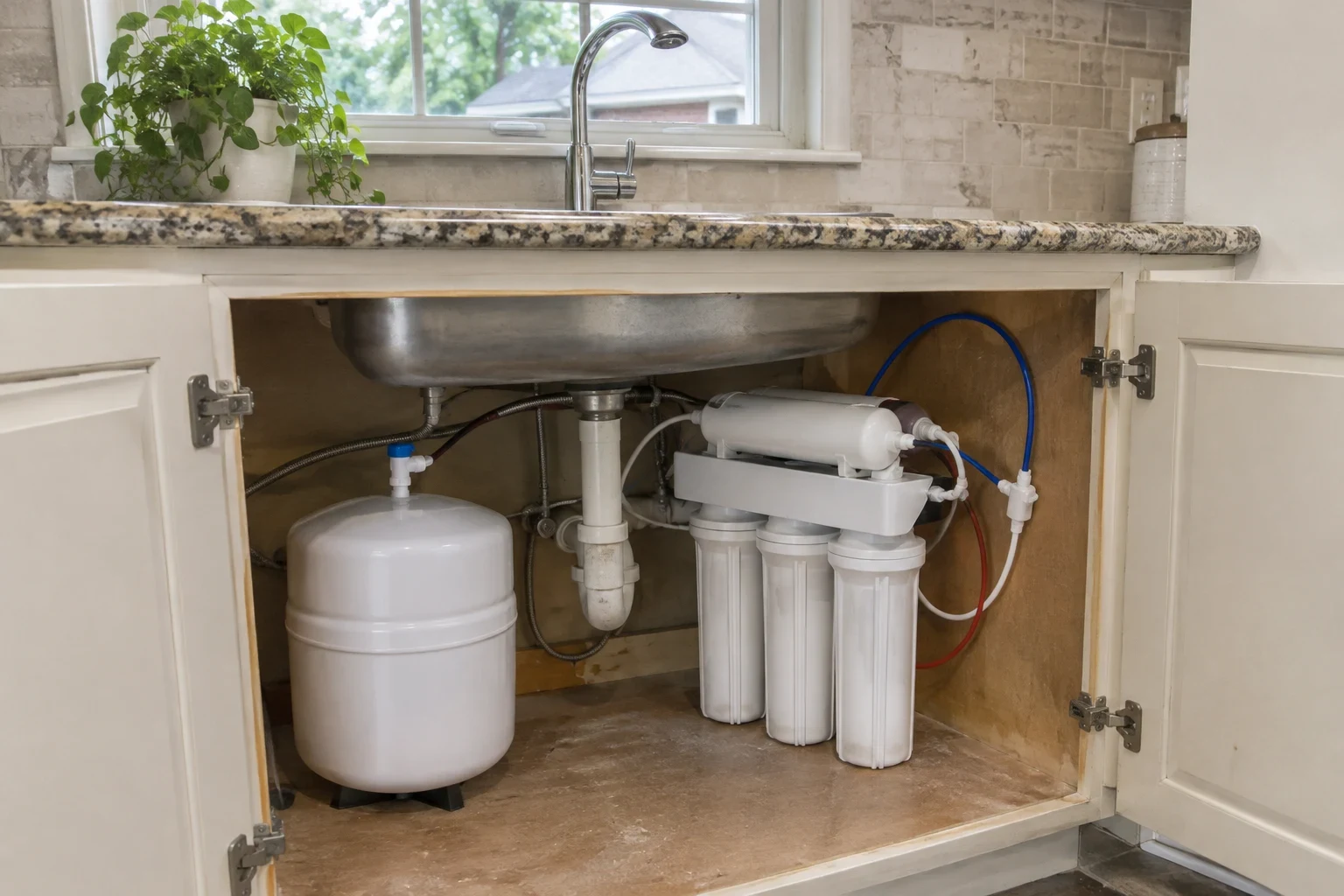
A reverse osmosis system pushes water through a very tight membrane that lets water pass but holds back dissolved solids, metals and a long list of trace contaminants. Sediment and carbon cartridges sit in front of it, catching grit and chlorine so the membrane lasts longer. A last polishing cartridge rounds out the taste. The finished water waits in a compact storage tank, or comes straight through a tankless unit, and pours from its own faucet beside your main tap.
This system earns its place when the water you care most about is the water you drink and cook with. Most calls we get start with a chemical or stale taste, aging pipes in the house, or simply wanting an extra layer beyond what the city already does. Spotting on shower glass and scale throughout your home are a different problem, better handled at the main line with whole-home filtration or water softener installation, and we will point you there honestly if that is the better match.
We keep our team small on purpose. The person who reads your water results is part of the crew that fits the system, so install day starts with people who already know your kitchen and your readings.
What your installation includes
A water test before anything else
We measure total dissolved solids, hardness and chlorine at your tap. Hard Central Texas water wears an RO membrane faster, so these readings decide whether you need a pre-filter or softening ahead of the system.
A system sized to your household
We match the daily output and tank size to how much water you actually drink and cook with. Tankless models suit tight cabinets and larger families that draw water often.
Faucet fitting on your countertop
We drill granite, quartz and other solid surfaces with the proper diamond bit at a slow, cooled pace, or use an existing sprayer or soap hole when one is free. You choose a faucet finish that sits well with your existing fixtures.
Clean plumbing under the sink
A dedicated feed valve, a proper drain connection and neatly routed tubing that leaves room for your garbage disposal and storage. We mount the unit so filter changes are easy to reach.
Optional refrigerator line
We can run RO water to your fridge's dispenser and ice maker so the ice tastes as clean as the glass.
Startup, flush and walkthrough
We flush the new filters, check for leaks, take a fresh dissolved-solids reading so you can see the change, and show you how and when to swap cartridges.
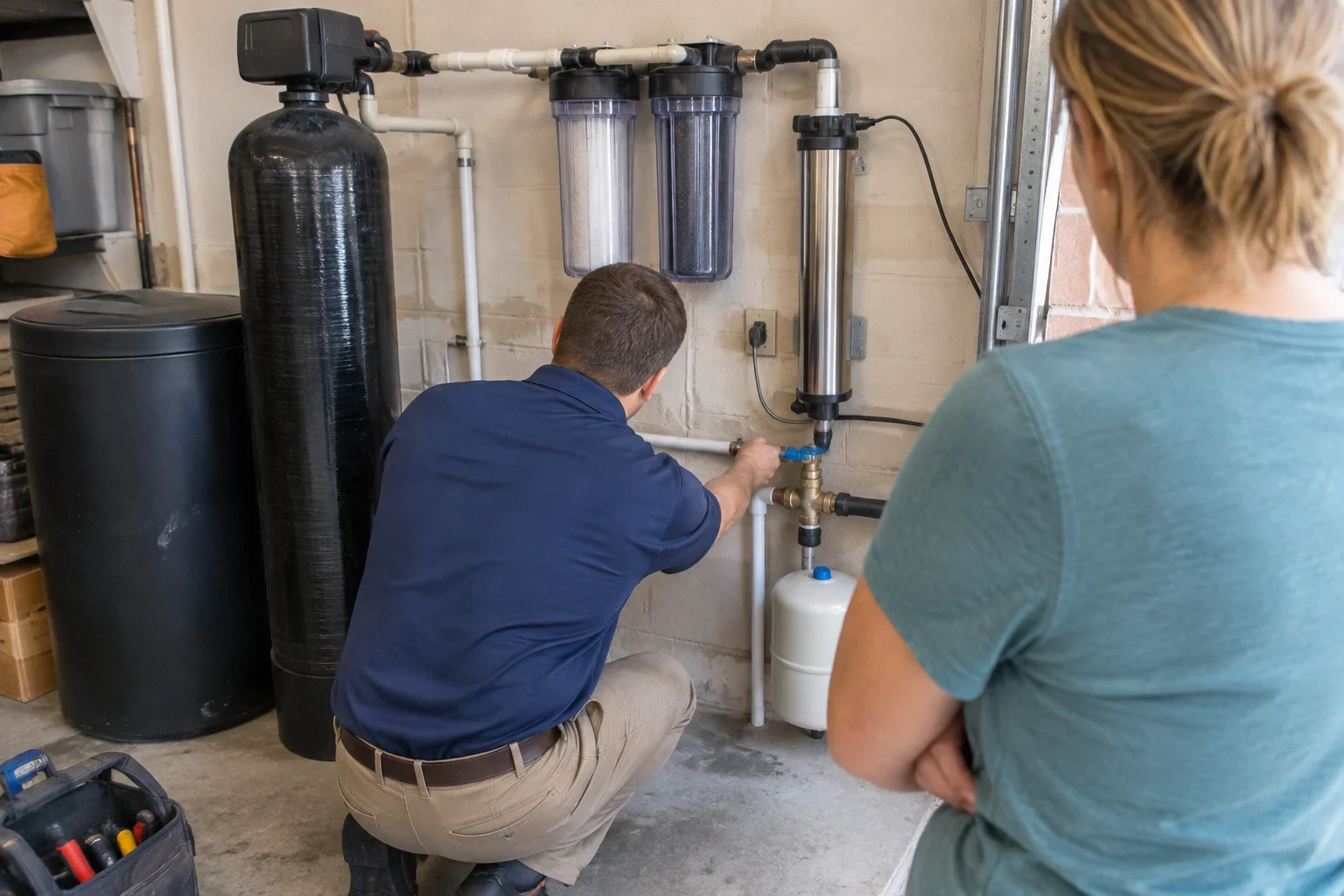
Signs your kitchen could use reverse osmosis
- You buy bottled water every week
- Carrying jugs in from the car and topping up pitchers adds up in time and money. A dedicated RO faucet gives you water of that quality whenever you turn the handle, with nothing to haul and no empty bottles to sort.
- Coffee and tea taste off
- Chlorine and dissolved minerals dull the flavor of coffee, tea and even ice cubes. The change usually shows up in the very first pot brewed with RO water.
- The plumbing in your home is older
- Older pipes and fixtures can release metals into water that stands in the lines overnight. A membrane right at the kitchen sink catches that before it reaches your glass.
- Kettles and glasses keep a cloudy film
- White, chalky residue on cookware and stemware points to high dissolved solids. With RO water, glasses dry clear and the kettle stays clean inside.
- A pitcher filter cannot keep pace
- Pitcher cartridges help with taste but leave most dissolved solids behind, and the pitcher always needs refilling. An RO system treats much more and refills itself.
How the job runs
- 1
A phone call, then a free water test
Once you reach us, we agree on a visit and test the water straight from your kitchen tap. You see the readings and hear a plain answer on whether RO suits your home.
- 2
A clear recommendation
We explain which system, faucet and add-ons suit your water and your cabinet, and why. Your quote lists each item so you know what you are paying for.
- 3
Installation day
The same crew returns, covers your floor and counter, and empties the cabinet with you. Most kitchen installs take a few hours, and the water is shut off only for a short stretch.
- 4
Testing and cleanup
We flush the new cartridges, inspect each fitting for drips, confirm the reading at the new faucet, and leave the cabinet and counter as tidy as they were when we arrived.
What sets the cost of your RO system
Your price depends on the system your water calls for and what your kitchen needs to fit it. Installation is free, so the quote is mainly equipment plus any extra connections. We walk through each line with you during the test or by phone, so the bill holds no surprises.
- Tank or tankless system
- Our 5-stage tank reverse osmosis system is the less expensive option: sediment, GAC, carbon block, RO membrane and post carbon, with a storage tank under the sink. Our tankless reverse osmosis system (800 gallons per day, 7 stages) costs more to buy, but it takes up less cabinet space and refills faster.
- Your starting water
- High hardness or chlorine readings can mean the membrane needs an added pre-filter or softening ahead of it.
- Faucet and countertop
- Faucet styles and finishes vary in price. Drilling a new hole through stone needs more care than using an open sprayer hole.
- Extras and added lines
- A remineralizing stage, a booster pump for low pressure or a line to the refrigerator each add to the total.
What people ask about reverse osmosis
- Does reverse osmosis send water down the drain?
- Some of the incoming water rinses the minerals the membrane rejects out through the drain line. Today's units use much less for that than models from ten or twenty years back, and a permeate pump or booster improves the ratio further. Before you decide, we tell you the expected drain rate for the exact model.
- How often are filter changes due?
- Sediment and carbon cartridges typically need replacing every six to twelve months, based on your water and how much you use. The membrane tends to last a few years, longer when the pre-filters are kept fresh. We can teach you to swap them, or you can call and we will do it.
- Does RO water taste flat?
- Since most minerals are removed, the water tastes clean and neutral, and most people like it. If you want a little more flavor, we add a remineralizing cartridge that puts back a small amount of calcium and magnesium.
- Will RO fit under a sink that has a garbage disposal?
- In most kitchens it will. A standard storage tank needs only a small patch of cabinet floor, and a tankless unit needs less. During the water test we look inside the cabinet and plan a layout that clears the disposal and keeps storage space you can use.
- Does RO need a softener ahead of it?
- Many homes can skip it. Very hard water shortens membrane life, so high readings may lead us to suggest a pre-filter or water softener installation for the whole house. With moderate readings, the RO unit copes well on its own.
Find out what is in your drinking water
Start with a free water test at your kitchen tap. You will get the readings, an honest recommendation and a quote from the same crew who would do the work.