ServicesWater Testing & Analysis
Water Testing & Analysis in Georgetown
We test the water at your tap, explain what each number means and tell you plainly whether anything needs treating. Sometimes the answer is one filter, sometimes nothing at all. The same small crew that tests your water handles any work that follows.
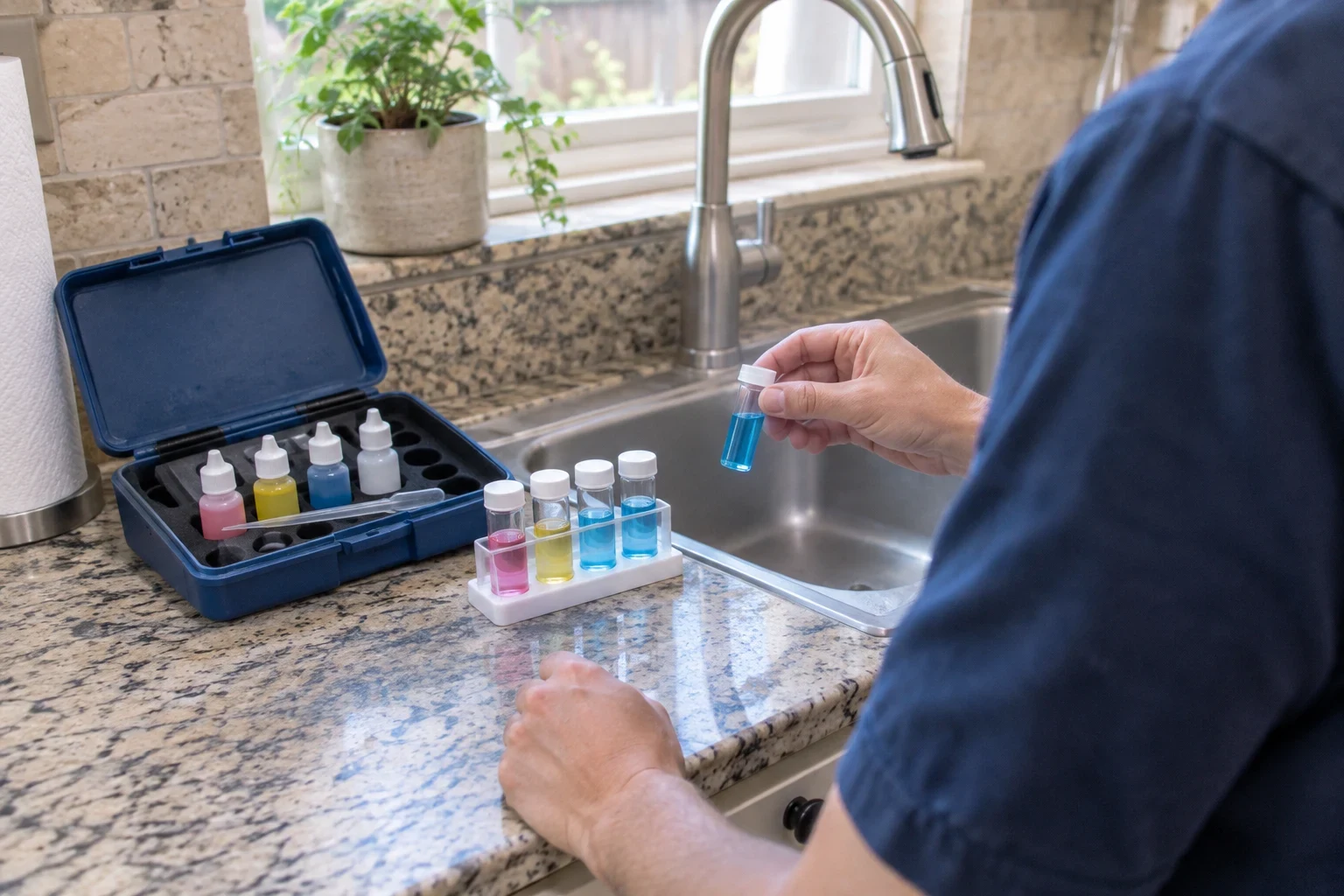
Testing comes first, equipment second
A call to us usually starts with something you have noticed: a white crust on the shower glass, a swimming-pool smell at the kitchen tap, or a reddish ring in the toilet bowl. Those signs have different causes and lead to different fixes. A test sorts out which one is behind yours, so your money goes toward equipment that answers the actual problem.
Water in this part of Texas picks up minerals as it moves through limestone, so it often runs hard. How hard depends on your supply, and that number shapes what makes sense for your home. A softener, a salt-free conditioner and a carbon filter are quite different purchases, and we prefer to show you the reading instead of guessing.
Few hands touch the work. Whoever reviews your results with you is the same person who would plan and fit a system later, should you want one.
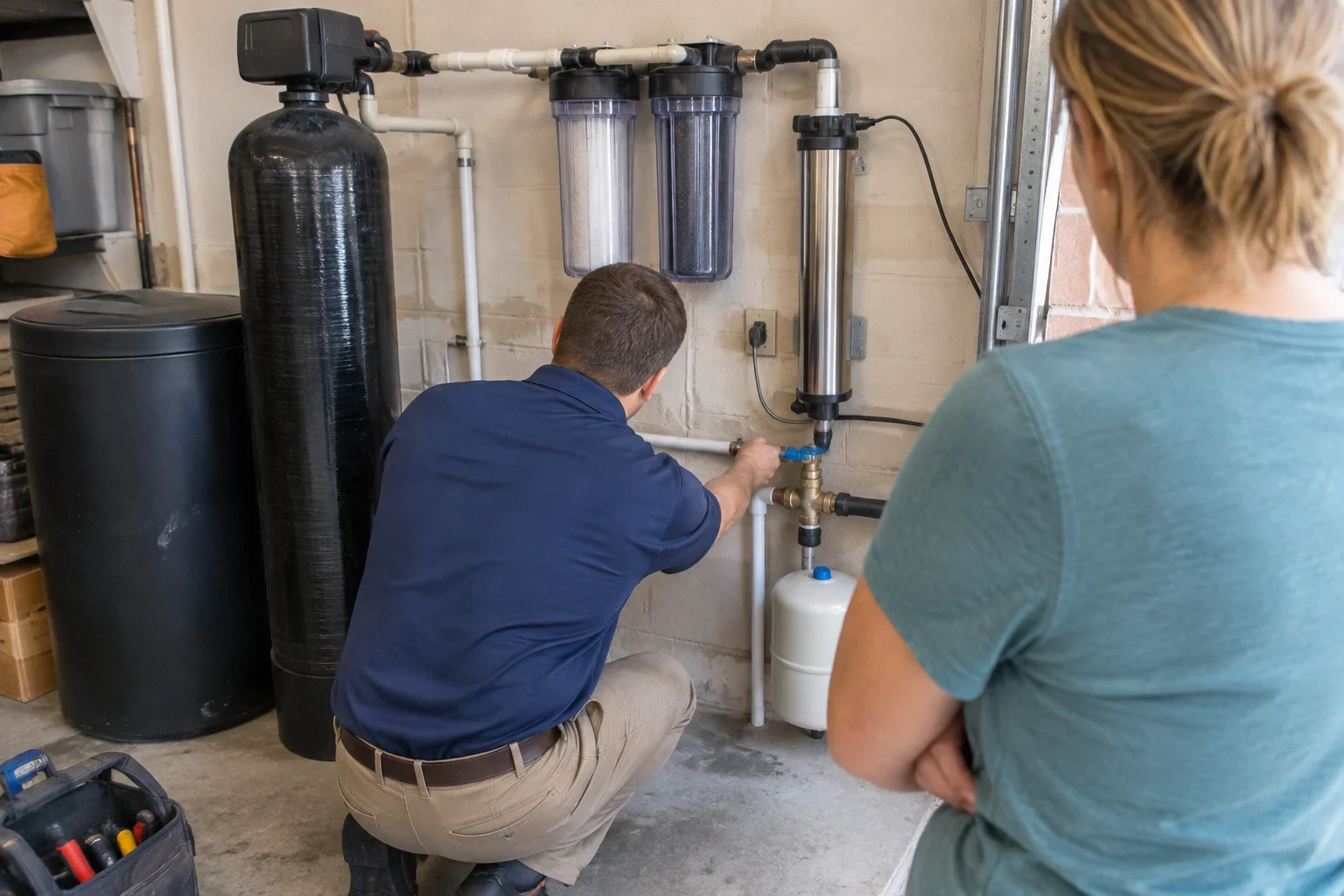
What we check during the visit
- 01
Hardness
We read calcium and magnesium levels in grains per gallon. That figure tells us whether scale is a minor annoyance or something steadily wearing on your water heater, fixtures and appliances.
- 02
Chlorine
Municipal water is disinfected on its way to you, and that is a good thing. A reading at your tap shows whether the taste or odor you notice is simply from treatment and not a sign of something more serious.
- 03
Iron and manganese
Small amounts are enough to leave orange or dark marks on porcelain and clothing. We look for each one separately, since they are removed with different media.
- 04
pH and total dissolved solids
pH tells us if the water leans acidic or alkaline, which matters for pipes and for certain treatment choices. A dissolved solids reading gives a broad view of the minerals present and is useful when reverse osmosis for drinking water is on the table.
- 05
A written summary
Every reading is written down for you to keep, with a brief plain-language note on what it means. If you want an independent lab panel for particular contaminants, we explain the process and show you how to collect the sample properly.
Questions about Water Testing & Analysis?
Call(512) 706-9279Signs it is time to test your water
Spots and crust that keep coming back
White film on glass shower doors, faucet aerators that clog, and kettles with a chalky lining all point to hardness. A test shows how much, which tells us how strong a fix needs to be.
A chlorine taste or smell
If you avoid drinking from the tap or keep a pitcher filter in the fridge, a chlorine reading tells us whether a carbon filter alone would solve it.
Stains in sinks, tubs or laundry
Rust-colored or gray marks often trace back to iron or manganese. Knowing which one is present matters before anything is installed.
A new home or a recent move
You may not know how the plumbing was treated or what equipment the last owners left behind. A test gives you a starting point.
Older equipment that seems to have quit
A softener that still cycles but no longer stops scale may be the wrong size for your water or simply worn out. Testing helps us tell the difference.
How a testing visit runs
- 1
A short phone conversation
You tell us what you have noticed and how long it has been going on. We set a time that suits your day and let you know who will be coming.
- 2
Sampling at the right taps
We draw water from the kitchen and, where it helps, from a point before any existing filter or softener. That way we see both what comes into your home and what reaches the glass. Nothing is taken apart, and we leave the area as we found it.
- 3
Results at your table
Most readings take a few minutes. We go over each one with you, show you the strips and meters, and explain which results are normal and which are worth acting on.
- 4
An honest recommendation
If the water is fine, we say so. If something is worth treating, we explain the options, from whole-home filtration to reverse osmosis systems, and give you a quote by phone or on the spot with no pressure to decide that day.
What can change the cost
There is no charge for the in-home test. Cost enters the conversation only if you want a deeper lab analysis or choose to treat your water afterward. Installation is free on the systems we fit, and we go through each line of a quote with you before you commit to anything.
- A lab panel beyond the basics
- An independent lab analysis is priced according to what it screens for. We help you pick a panel that fits your real concern instead of the biggest one on offer.
- What your readings turn up
- Moderate hardness with some chlorine may call for a single system. Hardness alongside iron can mean two units working in sequence, which affects both the equipment and the floor space needed.
- How much water your home uses
- Household size and the number of bathrooms decide how large a system has to be to keep pace without a drop in pressure.
- Where a system would sit
- An open garage wall near the main line makes for a simple fit. A cramped utility closet, or a line that has to be rerouted, takes more time and more material.
Water testing questions we hear
Do I pay anything for the water test?
No. The in-home test is free, and nothing is expected of you once it is done. Plenty of our visits finish with us telling the homeowner that their water needs no treatment.
How much of my day will the test take?
Plan on less than an hour, and that includes going through the readings together. When a lab sample is part of the plan, those results arrive later, and we call you to walk through them.
Why not just use a store-bought test kit?
A home kit is a fair first look, but the strips can be tricky to read and seldom cover iron, pH and dissolved solids in one go. We also draw samples from the right points in your plumbing and explain what the numbers mean for any equipment you have in mind.
Should I do anything to get ready?
Very little. Avoid running a softener regeneration or a long laundry cycle right before we come, and keep the kitchen sink and the point where water enters your home easy to reach.
If I buy a system, will someone else install it?
No. The same small crew stays with your job, so whoever tested your water also plans the system and returns to fit it. Fewer handoffs means fewer details slip through.
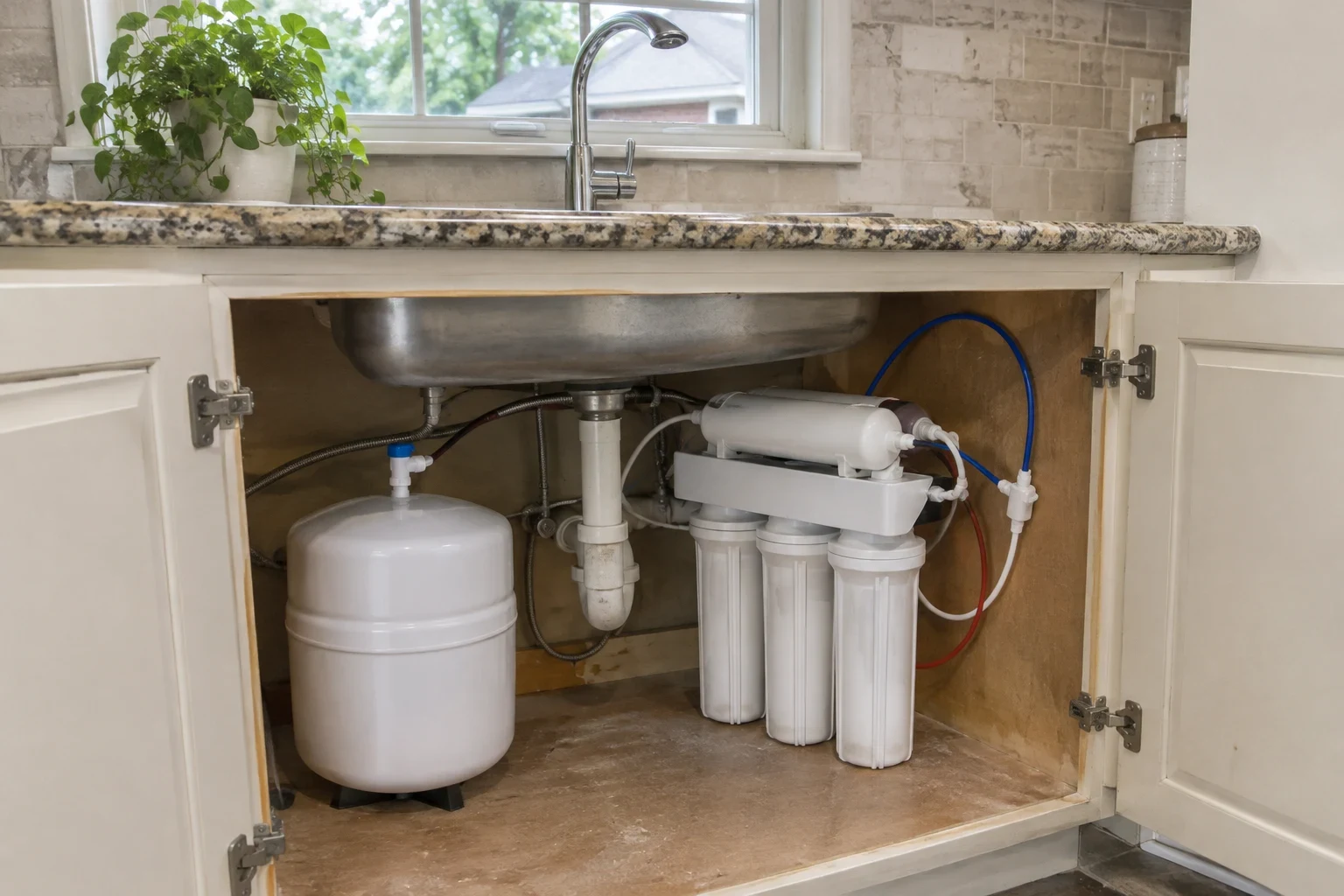
Start with a clear reading
A short call is all it takes to set up your test. We serve Georgetown and nearby towns including Round Rock, Leander and Hutto.